

What Is Ancestral Travel?
Ancestral travel, sometimes called heritage travel or roots travel, is the practice of journeying to places where your family history, cultural background, or ethnic roots originate. It is a deliberate way to travel that connects you to the land that shaped your people, to stories held in a language you may only partially know, and to the architecture, food, and rhythms of daily life that endure across generations.
It doesn't require a detailed family tree or a passport stamped with certainty. Ancestral travel can be as specific as visiting the village where your great-grandmother was born, or as open as exploring a country whose culture runs in your blood, even if you've never set foot in the country before. What matters is your intention to listen, look, and feel all that’s around you.
This is travel that asks more of you, more curiosity, more presence, more willingness to be moved. And in return, it offers more than traditional vacations —the feeling of coming home to a place you've never been.
Why It Matters
We live in a time of remarkable mobility and disconnection. Families scattered across continents. Languages go untaught. Traditions thin out over generations. Many of us are missing a piece of our history and are longing to learn more about our roots.
Ancestral travel matters because it addresses that longing directly. Research consistently shows that a strong sense of identity, knowing where you come from and feeling connected to something larger than yourself, supports resilience, confidence, and emotional well-being. When we travel to our places of origin, we are not just sightseeing. We are doing the quiet, meaningful work of self-understanding.
For women especially, ancestral travel can be a powerful act of reclamation. So much of women's history, the stories of our mothers, grandmothers, and great-grandmothers, was never written down. It lives in the landscapes they grew up in, the kitchens they cooked in, and the languages they sang in. Walking those same paths is a way of honoring what was survived and passed forward to us.
And beyond the personal side, ancestral travel builds cultural empathy. When you experience a place not as a tourist but as a relative, you may recognize a gesture, taste a flavor, or hear a phrase that feels strangely like home. That understanding changes how you move through the world.
How Ancestral Travel Deepens Your Experience
The difference between regular travel and ancestral travel is a bit like the difference between reading a book and reading a book written by your grandmother. The words take on weight and the details change everything.
You notice differently.
When you share a connection to a place, your attention sharpens. The architecture isn't just beautiful, it reflects the values and struggles of people who share your history. The food isn't just delicious, it tells a story of land, climate, and centuries of adaptation. You find yourself watching how people interact, how they greet one another, how they use time, and recognizing pieces of yourself in what you see.
Emotions surface that you didn't expect.
Many ancestral travelers describe moments of unexpected emotion: standing at a coastline, walking a cobblestone street, or simply hearing a language spoken in the rhythms of childhood memory. These moments are not melancholy; they are a form of recognition. Something in you knows this place, even if your mind doesn't.
Questions open up.
Ancestral travel rarely closes questions, it opens them. You return home curious about family stories you never thought to ask about, hungry for photographs you never knew existed, motivated to call a relative and ask what they remember. It sets something in motion that continues long after the trip ends.
You carry your people with you.
There is something profound about standing somewhere your ancestors once stood. You become, in that moment, a living connection between past and present. Many travelers describe feeling held by a place, even in its unfamiliarity.
"Standing along the cliffs overlooking the Atlantic Ocean, I found myself thinking about family, heritage, and how many generations before me may have stood on similar coastlines. It gave me a deeper curiosity about where my family came from." — Patty, AGC Portugal Traveler
How to Do Ancestral Travel Well
Ancestral travel doesn't require a research degree or a fully mapped family tree. But it does reward intention and preparation.
Before You Go
-
Talk to your oldest living relatives. Ask them what they remember: names, towns, stories, foods. Even fragments are useful, and often, the conversation itself is a gift.
-
Gather what you can: family photographs, immigration documents, old letters, and naturalization papers. Websites like Ancestry.com and FamilySearch.org can help surface records.
-
Learn a few words of the language, even if you won't be fluent. Hearing and speaking even basic phrases creates a connection that translation apps cannot replicate.
-
Research the history of the region, not just the tourist highlights, but the social and political forces that shaped the lives of ordinary people during the time your family lived there.
-
Let go of the idea that you need a perfect itinerary. Some of the most meaningful ancestral travel moments are unplanned.
While You're There
While you’re in the country, wander slowly and deliberately. Heritage travel rewards those who walk, linger, and look up. A few things to especially slow down and appreciate include:
-
Visit local markets, neighborhood bakeries, small churches, and cemeteries. These are the spaces where everyday life has played out for generations.
-
Try to experience the food as locals do, not just in restaurants, but also in markets and from street vendors. Food is one of the most direct connections to cultural memory.
-
Listen to the language, even if you don't understand it. The sound and rhythm of a language can carry its own kind of meaning.
-
Talk to people. A brief conversation with a shopkeeper, a local guide, or a fellow traveler can open windows that no guidebook can.
Give yourself permission to feel. Don't rush past the moments that move you. Sit with them. Make sure to keep a journal. The impressions of ancestral travel fade quickly when you return home to ordinary life. Write down what you notice, what you feel, and what surprises you.
When You Return
Share what you learned with family members. Your discoveries may mean more to them than you expect.
Make sure to continue the curiosity forward. Ancestral travel often sparks genealogical research, cultural exploration, or a desire to learn the language more fully.
Maybe even consider planning a trip back. One trip is rarely enough. Each return visit deepens what the first one began.
"Stay curious and open. Wander through local markets. Try the foods. Talk to people. Listen to the language even if you do not speak it fluently. The small everyday moments often become the most meaningful memories." — Patty
A Traveler's Story: Portugal Through the Eyes of Heritage
Patty's story | AGC Portugal Trip, 2026
Patty chose the Portugal trip for two reasons: her Portuguese heritage, and a desire to celebrate turning 65 by doing something meaningful and adventurous. She had never been to Portugal before. What she found there surprised her in ways she hadn't anticipated.
"Although I had never been to Portugal before, hearing the language for the first time and walking through the small towns and streets of Lisbon felt both new and oddly familiar."
From the first day, she found herself paying attention differently. She noticed the beauty of the blended cobblestones underfoot, the tiled buildings, the outdoor markets, the cafés opening slowly for the day. She watched cyclists navigate narrow streets, listened to street musicians, and felt herself drawn into the texture of everyday Portuguese life in a way that went beyond tourism.
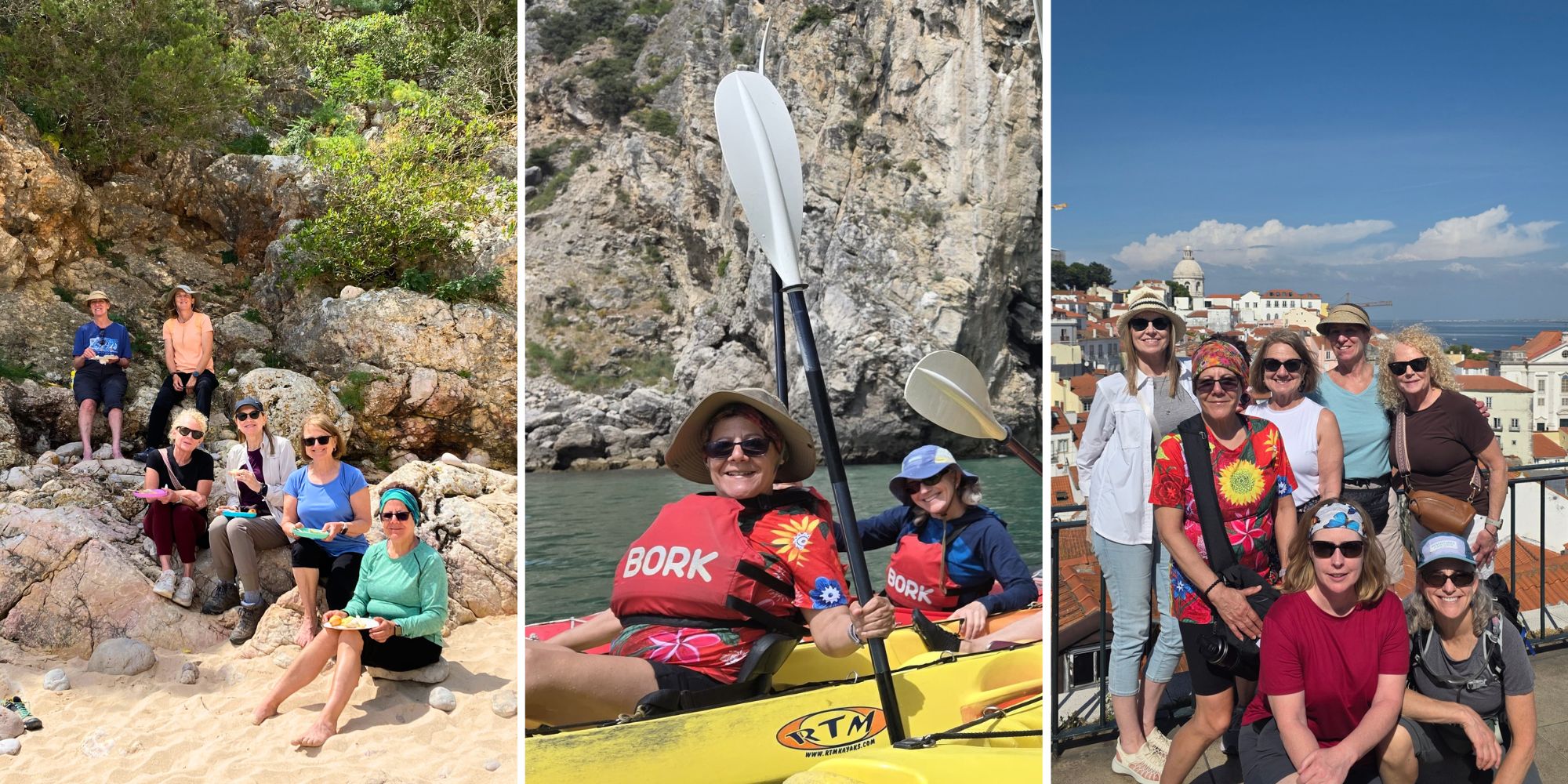
During hikes and kayaking excursions, guide Annabelle pointed out the land's historical significance, sharing information about local culture and traditions that wove meaning into every step. Patty tried green wine for the first time. She tasted a kumquat. She sat with her group after long, active days and shared meals, learning about Portuguese food culture and deepening connections to both the country and her fellow travelers — including friends she had made on a previous AGC adventure.
Then came the unexpected moments. Standing at the cliffs overlooking the Atlantic Ocean, she found herself thinking about family, about the generations who might have stood on similar coastlines before her family made their way to America.
"What surprised me most was how emotional some of the quiet moments became. It gave me a deeper curiosity about where my family came from and the paths that eventually led them to America."
She also celebrated her 65th birthday on the trip — with old friends and new ones, with guides who made the day feel special, and with a sense of having arrived somewhere she had dreamt of going to.
Her reflection on coming home carries something worth carrying forward:
"This trip reminded me that heritage travel is not only about genealogy or historical facts. Sometimes it is about feeling connected to a place in ways that are hard to explain — through food, conversations, scenery, culture, and shared experiences."
Ready to Find Your Way Home?
Adventures in Good Company offers active, small-group journeys for women across the globe. Whether you're returning to a country your family once called home or exploring a culture that has always called to you, we'll be with you every step of the way.
What Makes AGC the Right Partner for This Journey
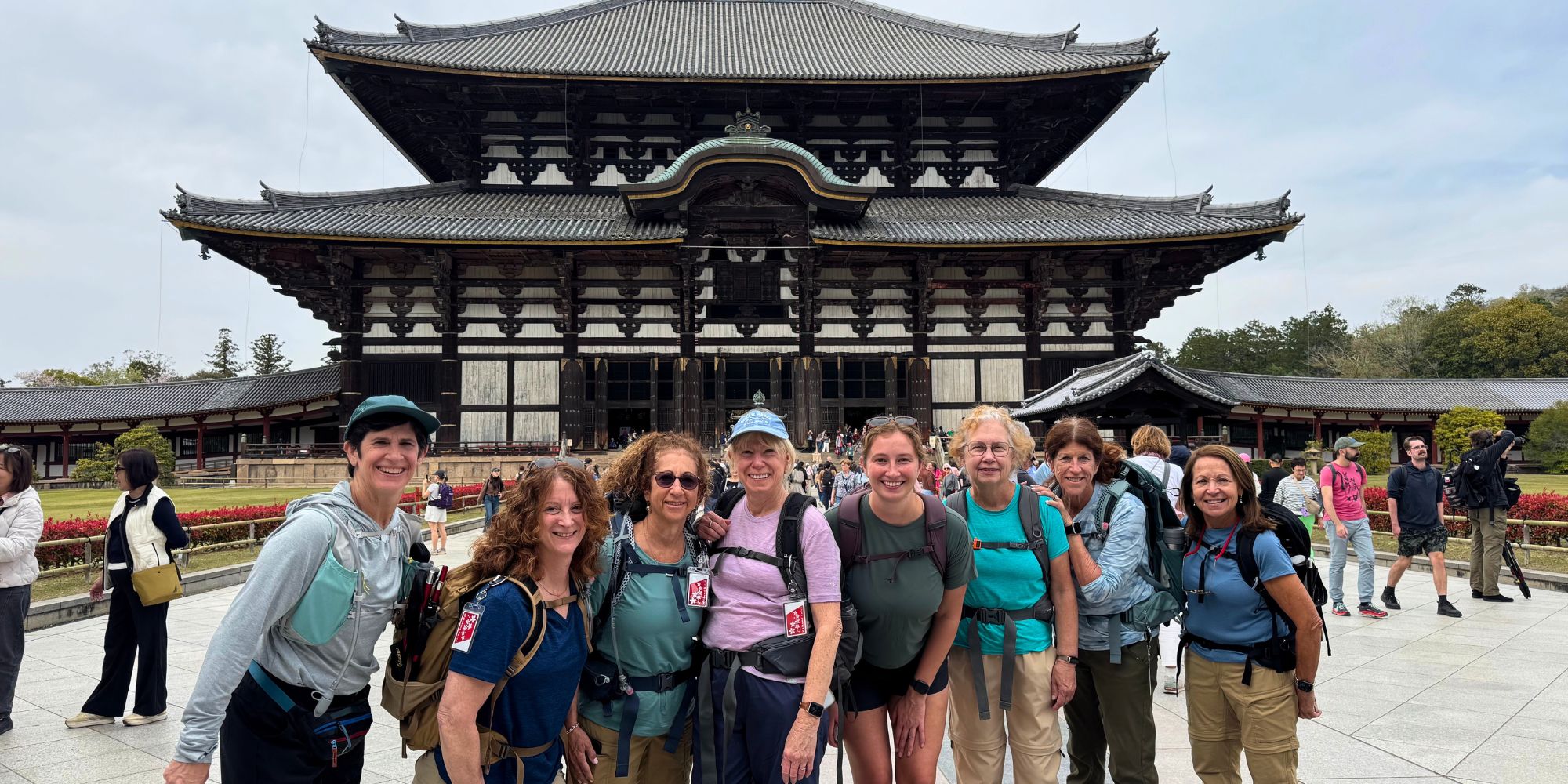
Ancestral travel is deeply personal and it deserves a travel experience built around that. At AGC, our small-group format (never more than 12 women) means you won't be rushed through sites or swept along in a crowd. You'll have the space to linger, to feel, to ask questions, and to share what this journey means to you with women who are paying the same kind of attention.
Our guides are more than logistics experts. They are storytellers, culture keepers, and companions who bring a place's history to life in ways that make everything more meaningful. On Patty's Portugal trip, guide Annabelle wove historical context and local traditions into every hike and kayak trip, not as a lecture but as a conversation—that’s the AGC difference.
If you have a destination in mind that connects to your heritage, we invite you to explore our full calendar of trips or reach out to us directly. We love helping women find the trips that feel like they were made for them.