
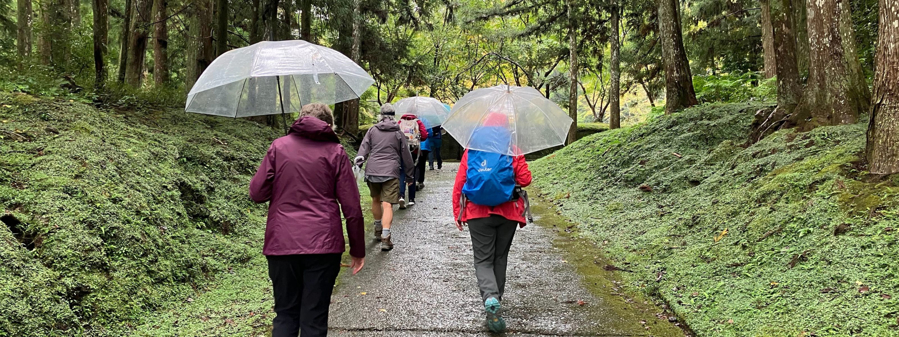
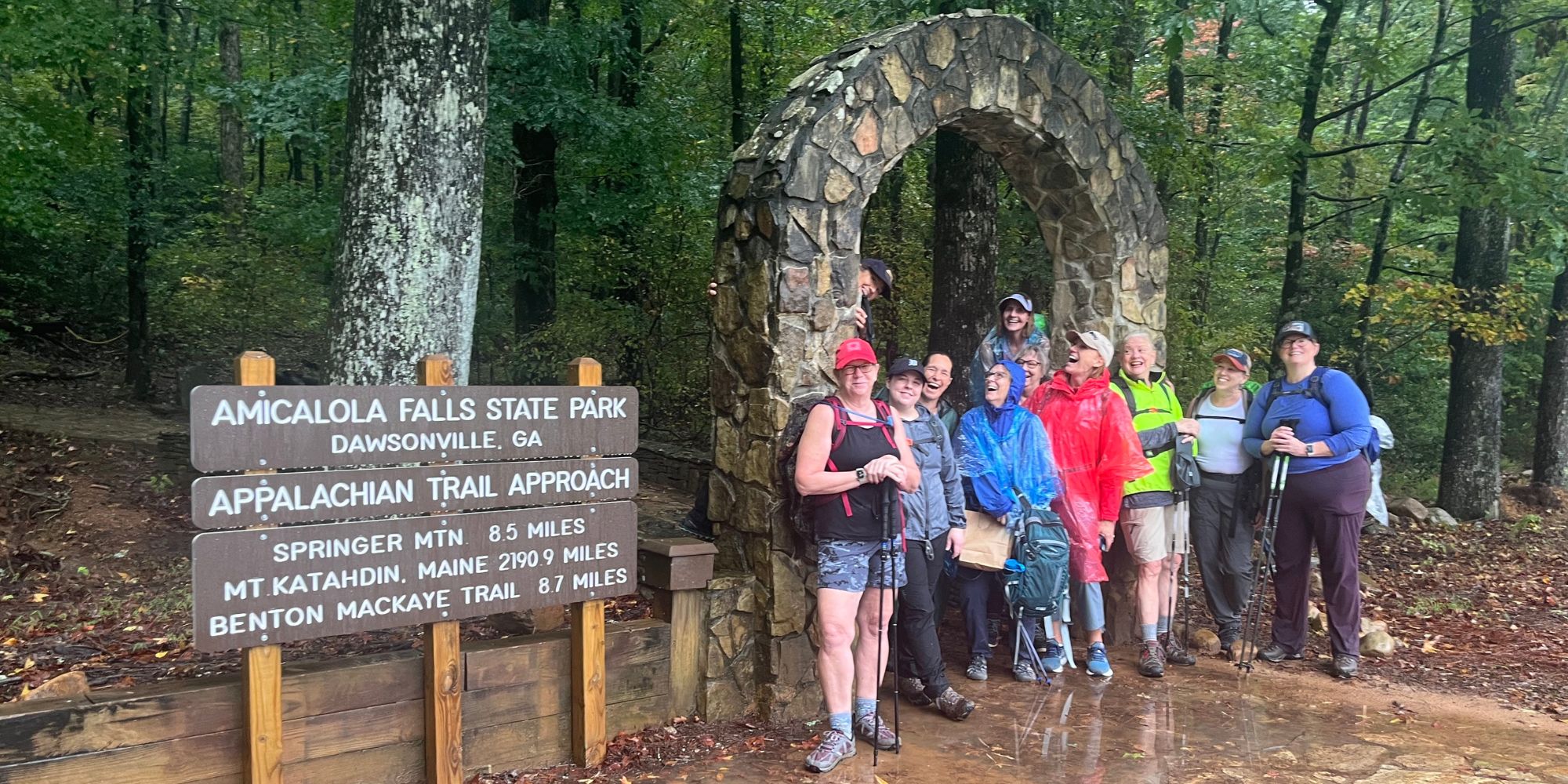
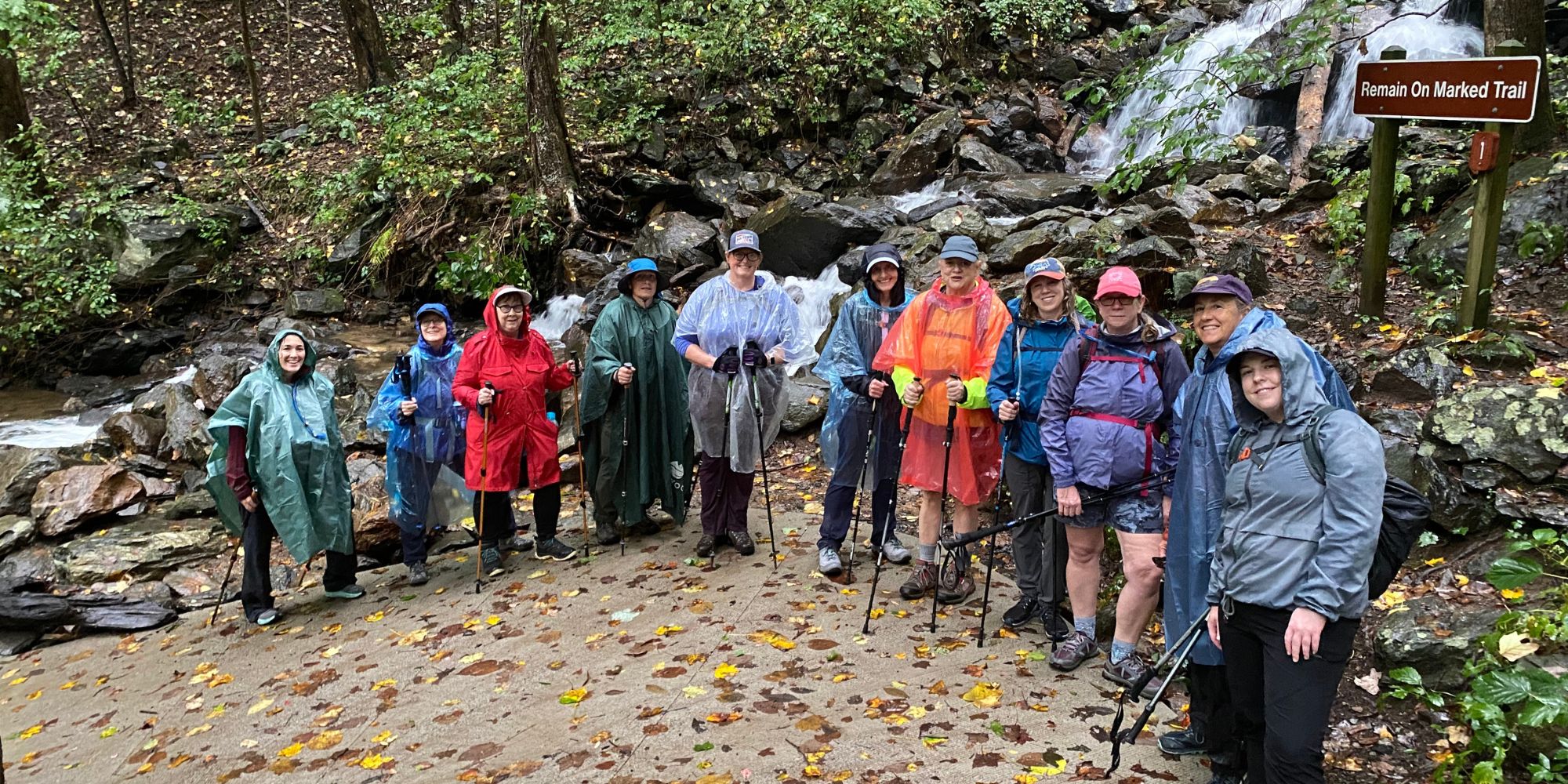
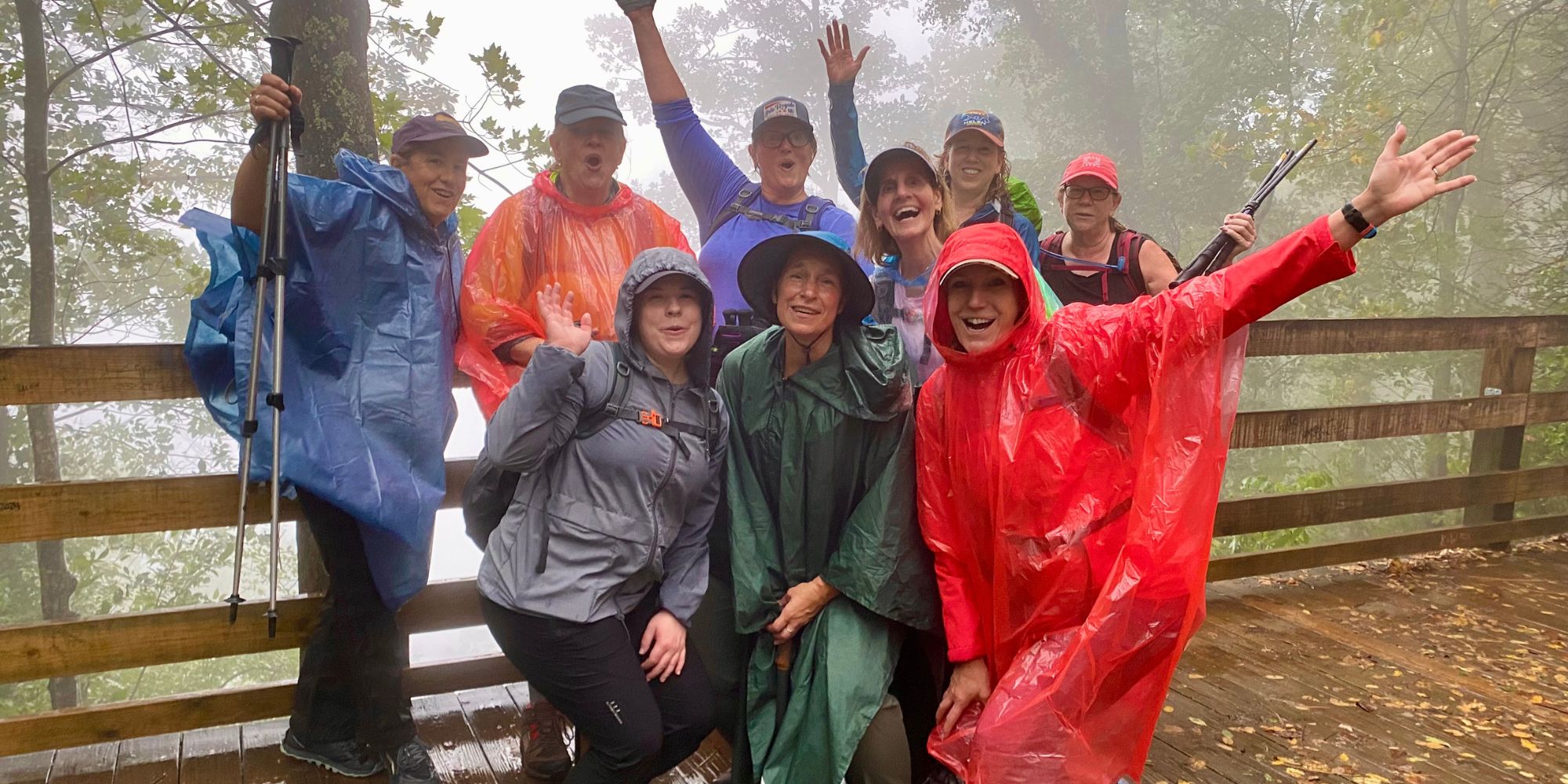
In 2024, a group of hikers headed to North Georgia for Adventure in Good Company’s Appalachian Autumn Adventure trip. Unfortunately, the tropical storm associated with Hurricane Helene was also moving through the area. The group’s guides, including myself, did make a couple of major itinerary changes to stay safe, but they still took on some seriously drenching hikes. Thankfully, the group all came prepared to manage the wet conditions.
The goal for rainy hiking isn’t to stay perfectly dry—that’s rarely realistic—but to stay warm, comfortable, and able to keep moving. In this blog, you’ll find some of the ways we managed to have an awesome and comfy time despite the rainstorms in North Georgia. These are tips to hold onto for your own rainy day hiking. As avid adventurers, we’re bound to run into a few rainstorms in our lifetime of hiking.
Your Base Layer Matters: Start with Quick-Dry Clothing
Your first layer should still be the type of clothing you would usually hike in: quick-dry, synthetic, sweat-wicking tops and shorts or leggings will keep you from getting too sweaty inside your rain gear. Cotton, on the other hand, tends to soak up sweat and stay wet, making you feel chilled and clammy. Merino wool is a good natural fiber option because it maintains its insulating properties even if it gets wet.
Rain Jacket vs. Poncho: Which Is Better for Hiking?
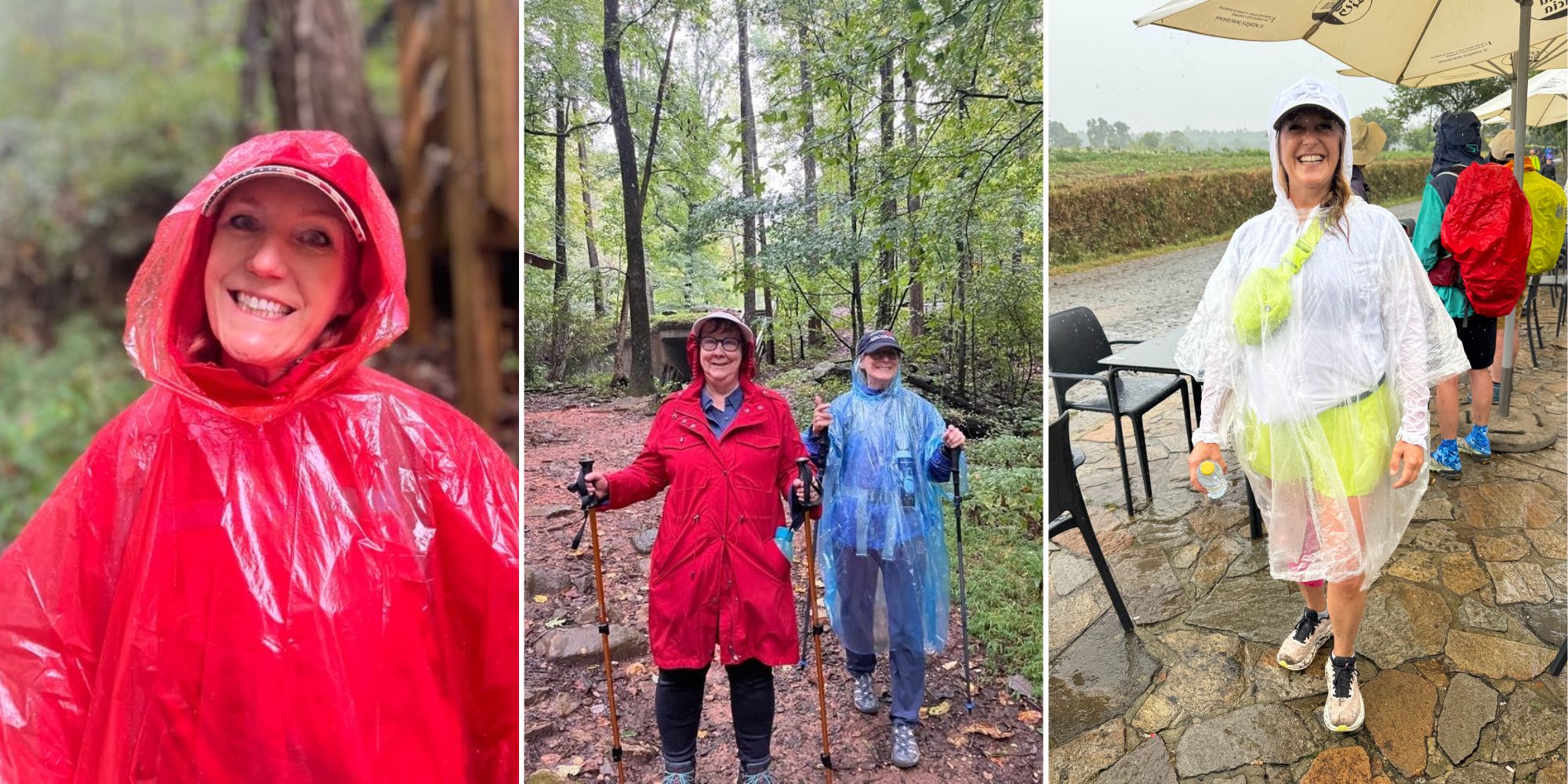
Consider the type of rain you’ll be dealing with. For a forecast of light rain or occasional showers, a lightweight rain jacket is usually enough. Look for one that’s breathable and easy to pack, with features like ventilation zippers and an adjustable hood. This type of jacket helps keep you dry without trapping too much heat.
When you’re dealing with steady, heavy rain like we were in North Georgia, a poncho can sometimes be more effective. They’re typically made of a thicker, less-permeable fabric than rain jackets, so they keep your shoulders drier for longer. The large opening at the bottom provides good airflow to regulate your temperature, and it is often large enough to cover both you and your backpack while hiking. While it definitely feels more bulky than a sleek rain jacket, that drapey coverage and extra ventilation can make a big difference when you’re hiking in a deluge and/or warm conditions.
The Best Rain Protection for Your Legs
In cold, windy conditions, rain pants can be a super helpful addition to your rain outfit to help you stay warm and dry. However, they don’t breathe very well, which means they can make you feel hot and sweaty when you’re hiking at an intense pace.
An alternative that works well for many women is a rain skirt worn over shorts. It provides protection from the rain and a little pocket of warm air around the legs while still allowing for airflow. It’s also easy to take on and off as conditions change. For moderate temperatures or more strenuous hikes, a rain skirt can help hikers find the right balance of coverage and comfort.
How to Avoid Slipping on Wet Trails
Rain changes the trail in ways that can catch you off guard. Rocks become slippery, dirt turns to mud, and roots can be especially slick underfoot. Trekking poles (which we recommend on nearly all of our trips) are incredibly useful in these conditions. They allow you to spread out your weight between more points of contact with the ground, so you can test the slickness of a patch of trail without committing your full weight to it, which can be the difference between a solid step and a banana peel moment on an unpredictable wet trail. They improve your balance, give you extra points of contact with the ground, and help reduce strain on your knees, especially when going downhill, which all can add to a more confident, stable hiking experience.
Keep Your Gear Dry in the Rain
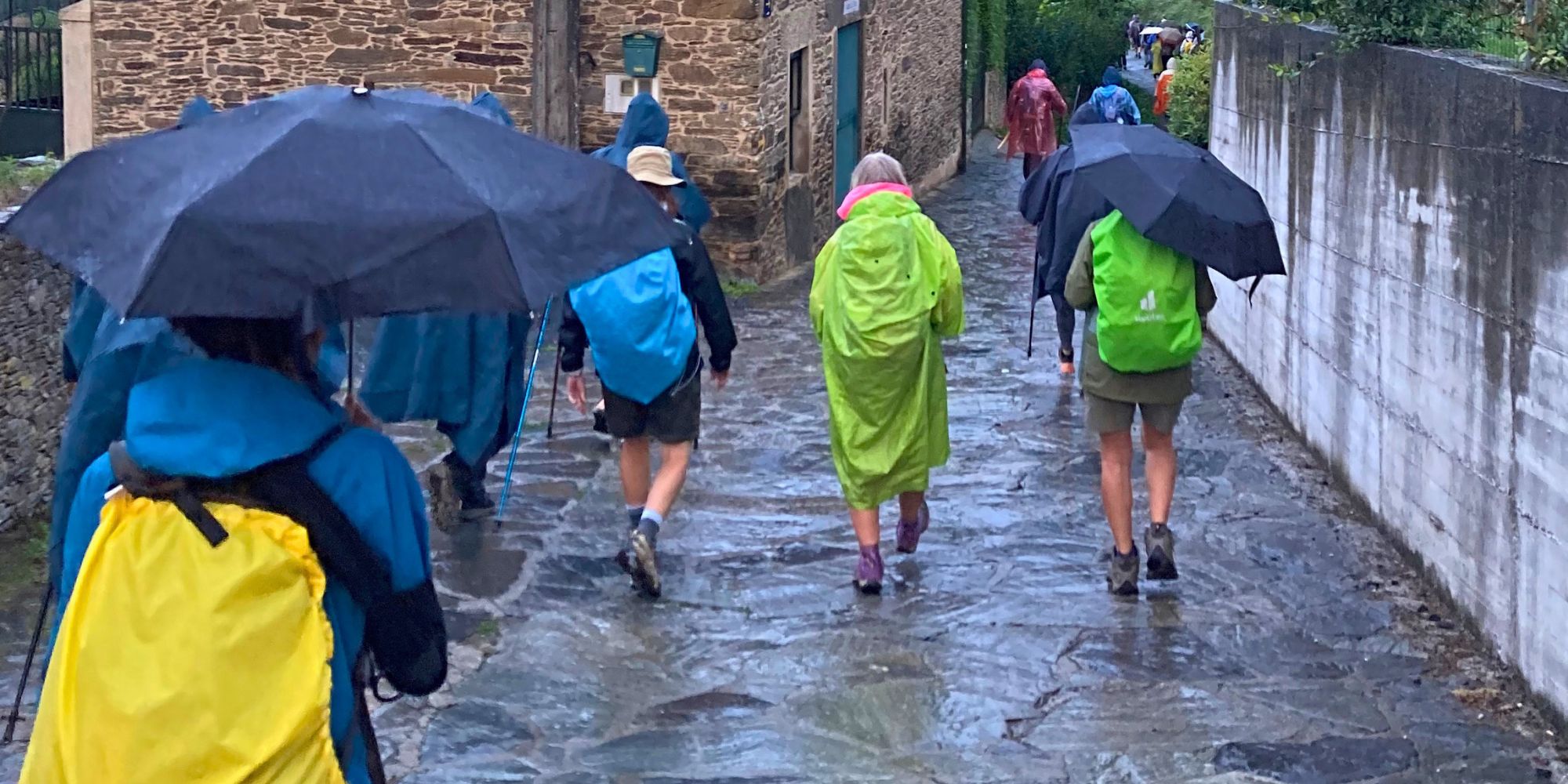
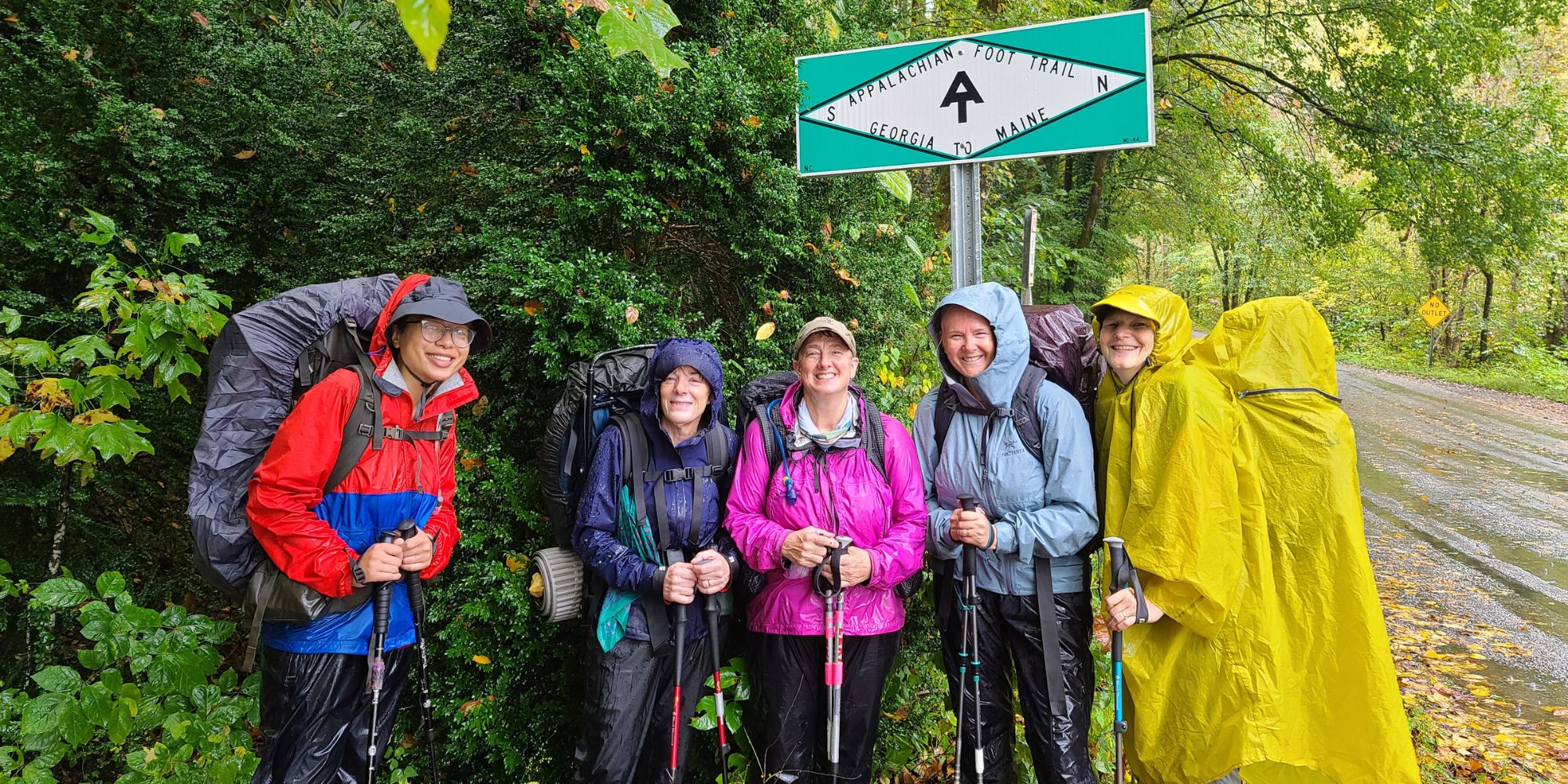
Even if you’re okay getting a little wet, you should try to keep your pack and gear as dry as possible. A backpack rain cover is a simple and effective way to protect your food, first aid, and dry layers. Many hiking packs come with them built into a little compartment on the bottom, but you can also buy them from most major outdoor gear companies.
For extra protection, you can also organize important items in waterproof bags inside your pack. That way, even if rain does get in, your essentials stay dry and usable.
Hydration Still Matters in the Rain
It’s surprisingly easy to forget to drink water when you’re hiking in the rain. Personally, the sensation of being damp and chilly makes me crave water much less than I normally would on a hike. I have to consciously remind myself to take sips more often when it’s raining, even if I don’t feel thirsty.
Even when it’s cooler, your body still needs hydration to keep your energy up and prevent cramping. This is where electrolytes can help. Adding some flavored electrolytes to your water bottle not only supports energy and muscle function but also makes drinking more appealing in the rain.
Always Pack Spare Socks
A dry pair of socks can completely change how you feel on a rainy hike. Wet feet are more prone to blisters and can quickly become cold and uncomfortable. Having an extra pair gives you the option to reset during a break or at the end of your hike. It’s a small item that takes up very little space but has a big impact on overall comfort and morale.
Embrace the Adventure of Hiking in Wet Weather
Hiking in the rain is less about fighting the weather and more about working with it. When you’re prepared with quick-dry clothing, the right rain protection, thoughtful layering, and a few key accessories, you can stay comfortable and enjoy your hike.
There’s something uniquely peaceful about being outside in the rain. The trails are often quieter, the air feels fresh, and the landscape takes on a different kind of beauty. With the right mindset and gear, a rainy hike can become one of your most memorable adventures. What’s that saying about learning to dance in the rain? :)