
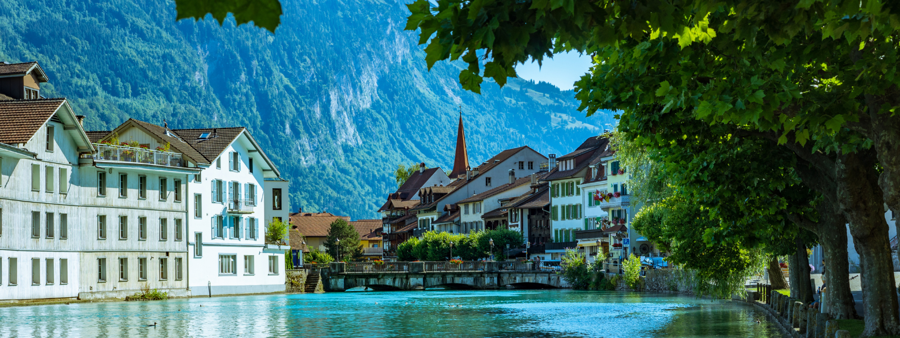
Most people who dream of hiking in Switzerland focus on the scenery: the Eiger's north face, the turquoise lakes, the wildflower meadows at 8,000 feet. And yes, all of that is every bit as spectacular as the photographs suggest. But ask anyone who's actually done the Via Alpina what they remember most vividly, and somewhere in the conversation, the food comes up.
There is something about earning a meal with your legs, in a country that has been perfecting mountain cuisine for centuries. On our 9-day guided journey from Zurich to Montreux, our group discovers that Switzerland is not just one of the world's great hiking destinations, it is one of the world's great eating destinations, too. Here's how our adventure, Switzerland: Hiking on the Via Alpina, unfolds, course by course.
A First Taste of Switzerland in Zurich
Where the adventure and the eating begins
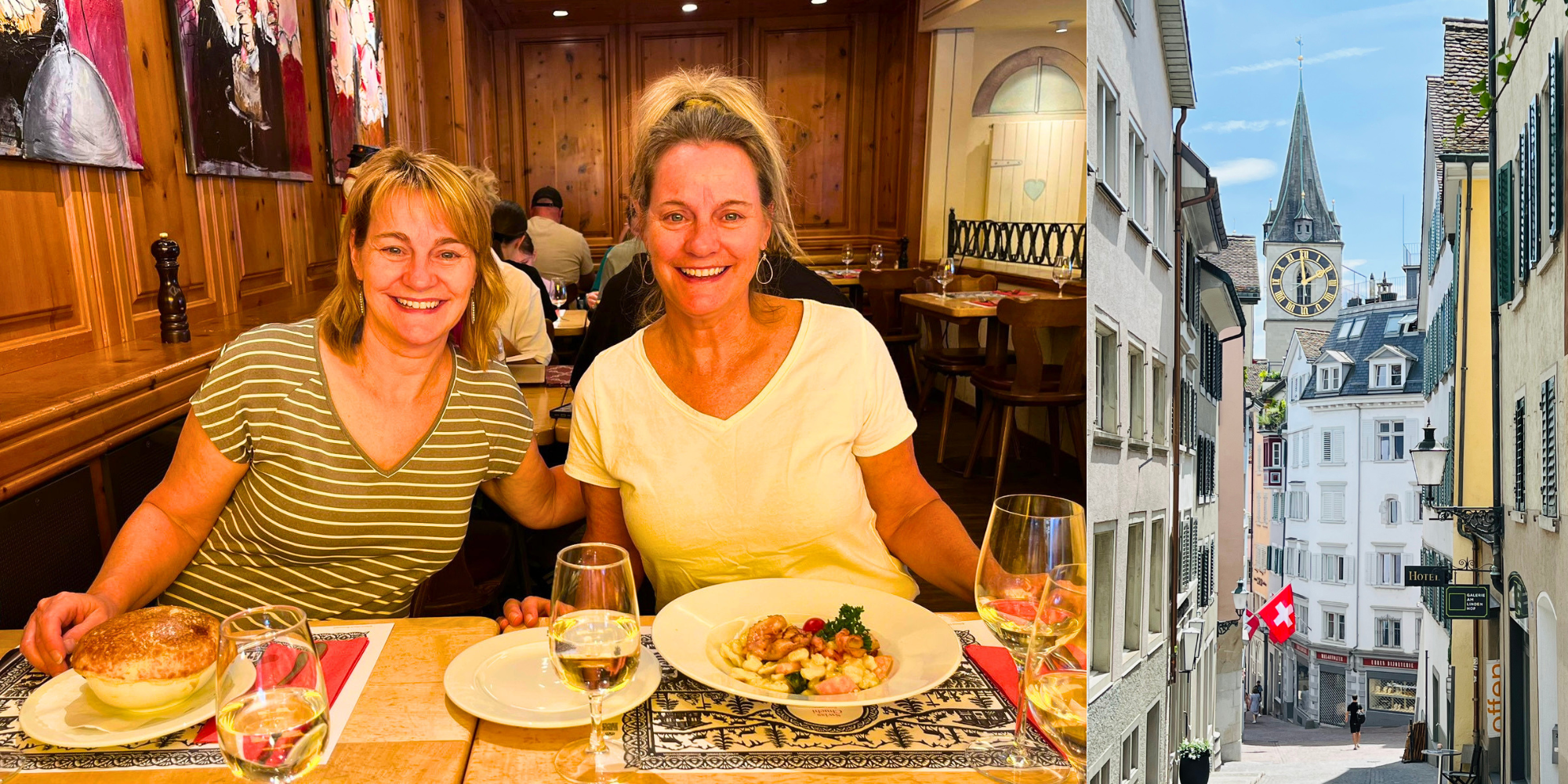
Every great meal starts with something small and surprising that sets the tone for everything to come. Our first evening in Zurich serves exactly that purpose. After arriving at the charming Alma Hotel and meeting fellow travelers, we gather for a welcome dinner that gently introduces Swiss culinary culture.
Swiss food in Zurich won’t be quite the same as what you’ll experience in the Alps; the city carries a more cosmopolitan influence. Still, the first dinner will be unmistakably Swiss: good bread, local wine, and the first of many conversations about what you’re about to taste over the next eight days.
You might see dishes like:
-
Zürcher Geschnetzeltes — sliced veal in a creamy white wine sauce, often served with rösti
-
Rösti — Switzerland’s classic crispy potato dish
-
Local wines from the Zurich region, which are rarely exported and often a pleasant surprise
Meeting a Dairy Farmer at Engstlenalp — at 6,000 Feet
The best cheese of your life, earned on the trail
If there is one moment that captures what makes this journey different from other trips to Switzerland, it will be your time at Engstlenalp.
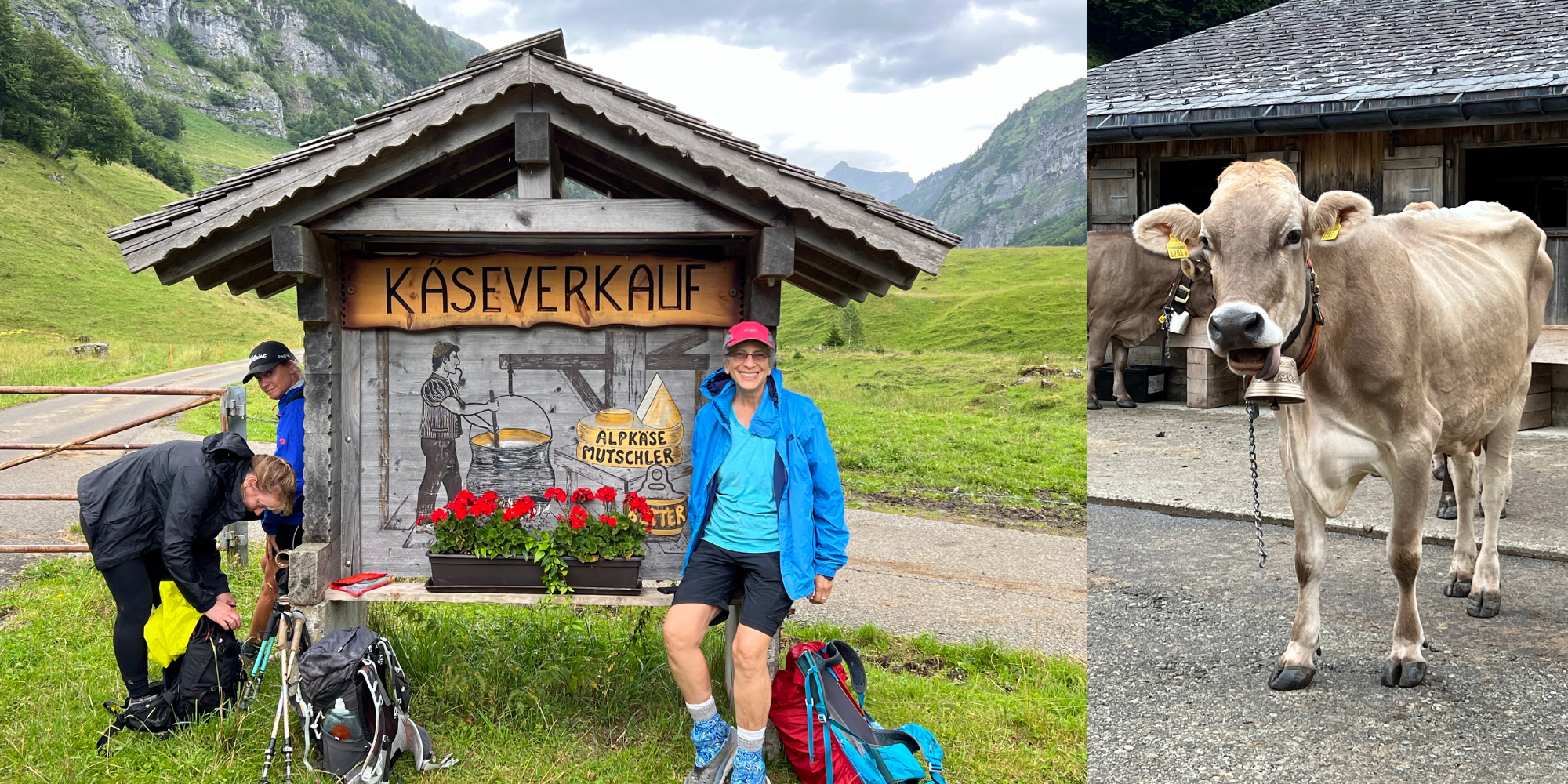
You’ll be standing in an alpine meadow, surrounded by mountain views, when a local dairy farmer hands you a piece of freshly made Alpkäse and explains how it’s produced. You’ll even meet the cows responsible for what you’re tasting.
Alpkäse is made in small batches during the summer months, when cows graze on high-altitude pastures. The grasses, herbs, and conditions in the mountains all influence its flavor, which is why it’s rarely found outside Switzerland. Tasting it right where it’s made gives you a much clearer sense of how place shapes what you’re eating.
This cheese stop comes mid-hike, which means you've already worked up a sweat–and appetite. What better hiking fuel is there? The answer, we can confirm, is none.
Fondue and Raclette in the Shadow of the Eiger
Switzerland's great communal dishes, exactly where they belong
There’s a reason dishes like fondue and raclette are so closely tied to Switzerland. They come from alpine traditions, where people relied on simple, local ingredients, including cheese, bread, and potatoes, to create meals that were both practical and satisfying after long days outdoors. Over time, those everyday meals became some of the country’s most recognizable and enduring food traditions.
You’ll experience them in places like Grindelwald and Interlaken, often after a full day on the trail. The setting adds to it, too. You’re not just trying these dishes for the first time, you’re enjoying them in the same landscapes where they’ve been part of daily life for generations.
Fondue is one of those meals that naturally brings people together in Switzerland. It’s a pot of melted cheese, typically Gruyère and Emmentaler, served with bread for dipping. It’s a great way to sit around the table and share stories from the day on the trail.
Raclette offers a slightly different experience. Melted cheese is scraped onto potatoes and served with simple sides like pickles and onions. It’s straightforward, comforting, and rooted in alpine traditions.
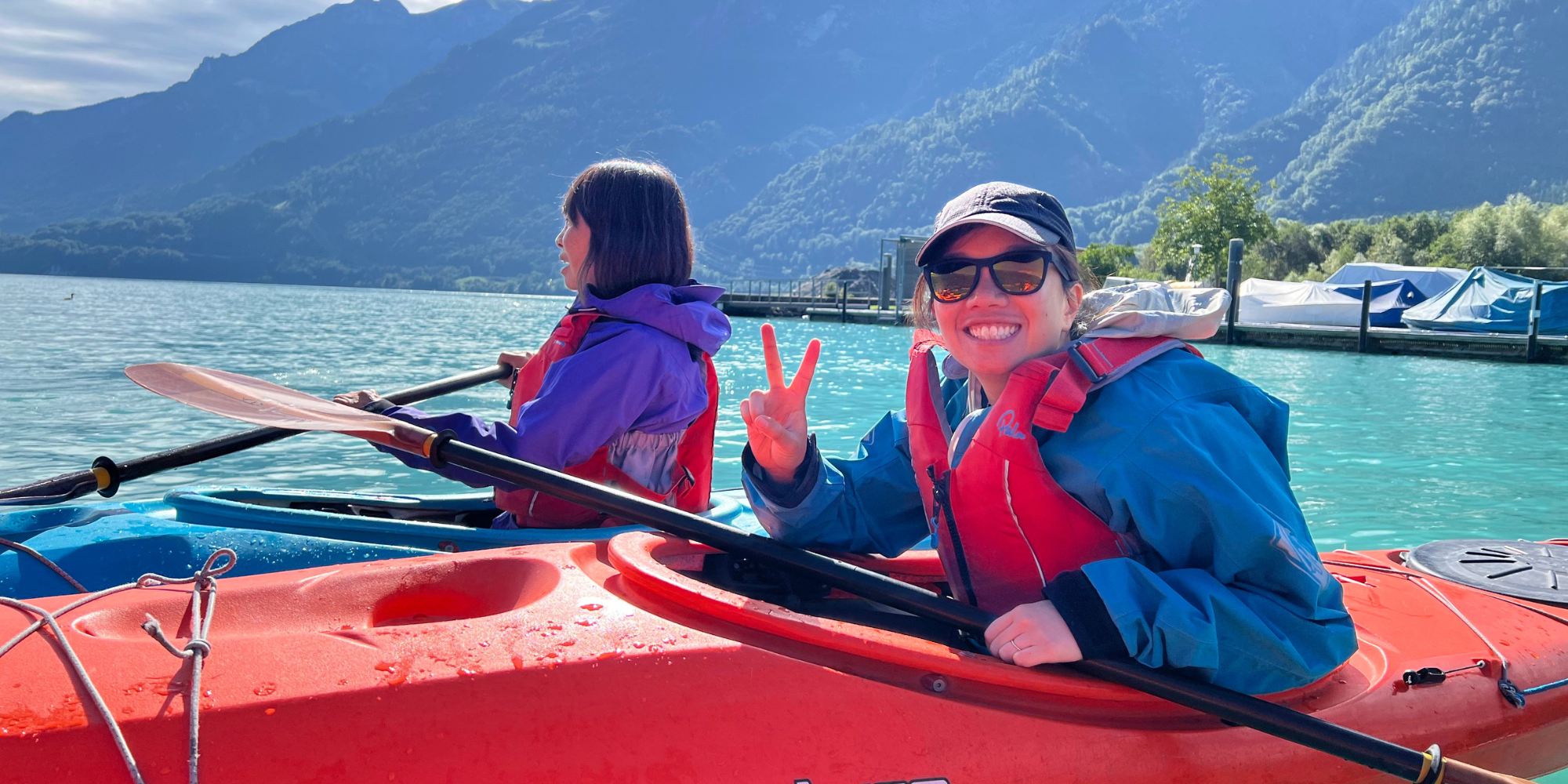
Alphorns, Kayaking, and the Lakes of Interlaken
A Change of Pace in Interlaken
After several days of hiking and exploring Switzerland’s food traditions, Day 5 on our Switzerland trip offers a different kind of experience, one that still connects you to the landscape and culture, just in a new way.
The day begins in a small village above Interlaken, where you’ll visit a local alphorn maker. The alphorn is one of Switzerland’s most recognizable symbols, originally used by shepherds to communicate across valleys and call cows back from the pastures.
You’ll learn how these long wooden instruments are made and even have the chance to try playing one yourself, an experience that offers a deeper connection to the traditions that shape daily life in the Alps.
In the afternoon, you’ll head out onto Lake Brienz for a guided kayak tour. Known for its striking turquoise color, the lake is fed by glacial water and framed by steep cliffs and surrounding peaks. From the water, you’ll see the landscape from a completely different perspective, including views of Ringenberg Castle along the shoreline.
By the time you return to Interlaken, you’ll be ready to sit down and enjoy another great meal filled with memories from the day.
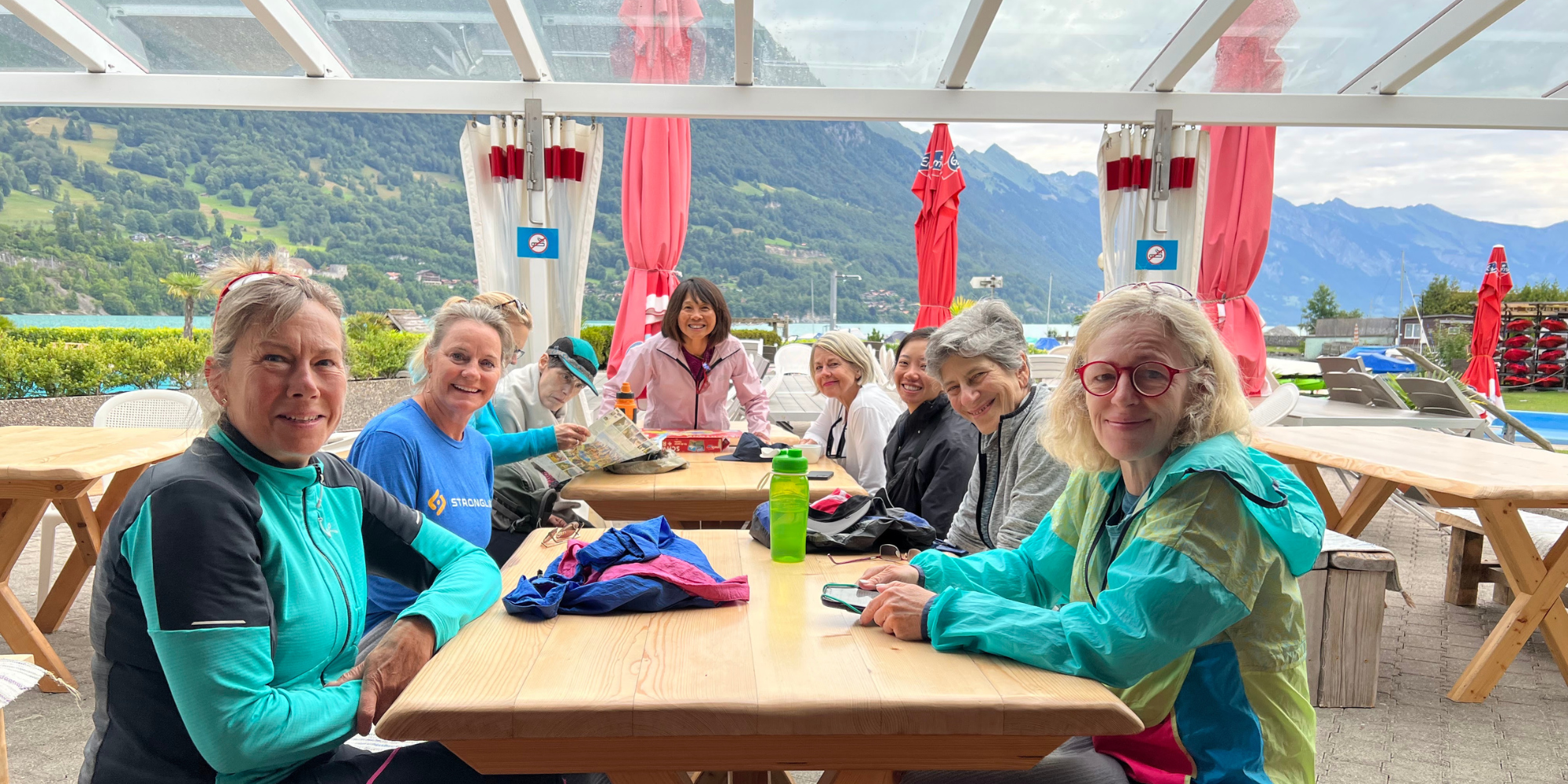
Lunch at Hahnenmoospass, with a View of Lenk
Why altitude is the world's best seasoning
After a few days of hiking, you’ll likely start to notice something simple but true: food just tastes better in the Alps. It’s not just the activity, it’s the setting, the pace, and the fact that you’ve earned it.
On Day 6, as you hike from Adelboden along the Gilsbach River toward Hahnenmoospass, you’ll stop for a trail lunch in one of the most scenic settings of the trip. The food itself is simple—fresh bread, local cheese, cured meats, and fruit—but it’s the surroundings that make it stand out.
You’ll be sitting in alpine meadows with views down to the village of Lenk, framed by surrounding peaks and distant waterfalls. It’s the kind of place where you naturally slow down, take it in, and enjoy what’s in front of you.
It’s also a good reminder that in Switzerland, meals don’t need to be elaborate to feel memorable. When you combine fresh, local ingredients with where you are, even a simple lunch becomes a memorable experience.
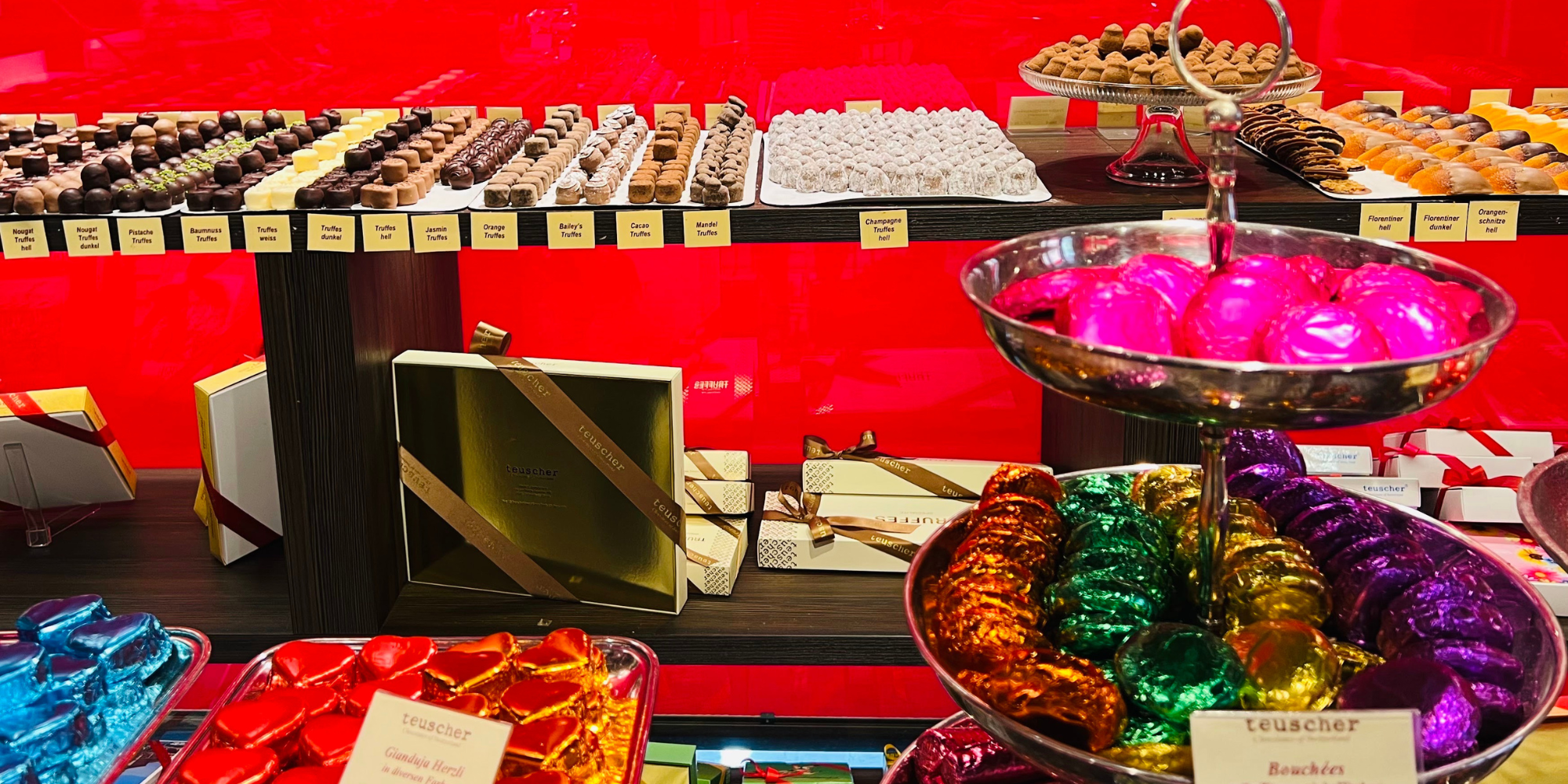
Swiss Chocolate: The Constant That Runs Through Everything
A must have every day in the Swiss Alps
Swiss chocolate is known around the world, but what stands out when you’re here is how much it’s part of everyday life. You’ll see it everywhere—at train stations, in village shops, and even waiting for you back at your hotel after a day on the trail.
There’s a reason for that. Switzerland has been producing chocolate since the 1800s, and it’s known for its smooth texture and high-quality milk. Cows grazing on alpine pastures produce rich dairy that gives Swiss chocolate its signature flavor: creamier and more balanced than what you might be used to at home.
On this trip, chocolate shows up in simple ways: as a quick energy boost on the trail, a stop at a small shop in town, or something to enjoy at the end of the day. You might find yourself reaching for a piece between hikes or picking up a bar during a train transfer without thinking twice.
By the end of the week, most travelers have a favorite—whether it’s a particular brand, style, or just the habit of always having a little on hand.
A Quick Guide to Swiss Chocolate Styles
- Milchschokolade
Classic Swiss milk chocolate — the style that made Switzerland famous. Toblerone, Lindt, and Frey all have excellent versions. - Dunkle Schokolade
Dark chocolate, increasingly popular; Swiss makers produce elegant versions that balance bitterness and fruit without the aggressiveness of French or Italian dark chocolate. - Cailler
The oldest Swiss chocolate brand, still made near Gruyères. Look for it in Broc — it's made where the famous cheese is produced. - Gianduja
Chocolate blended with hazelnut paste — a style that originated nearby in Turin but has been perfected by Swiss makers. Rich, nutty, and unforgettable.
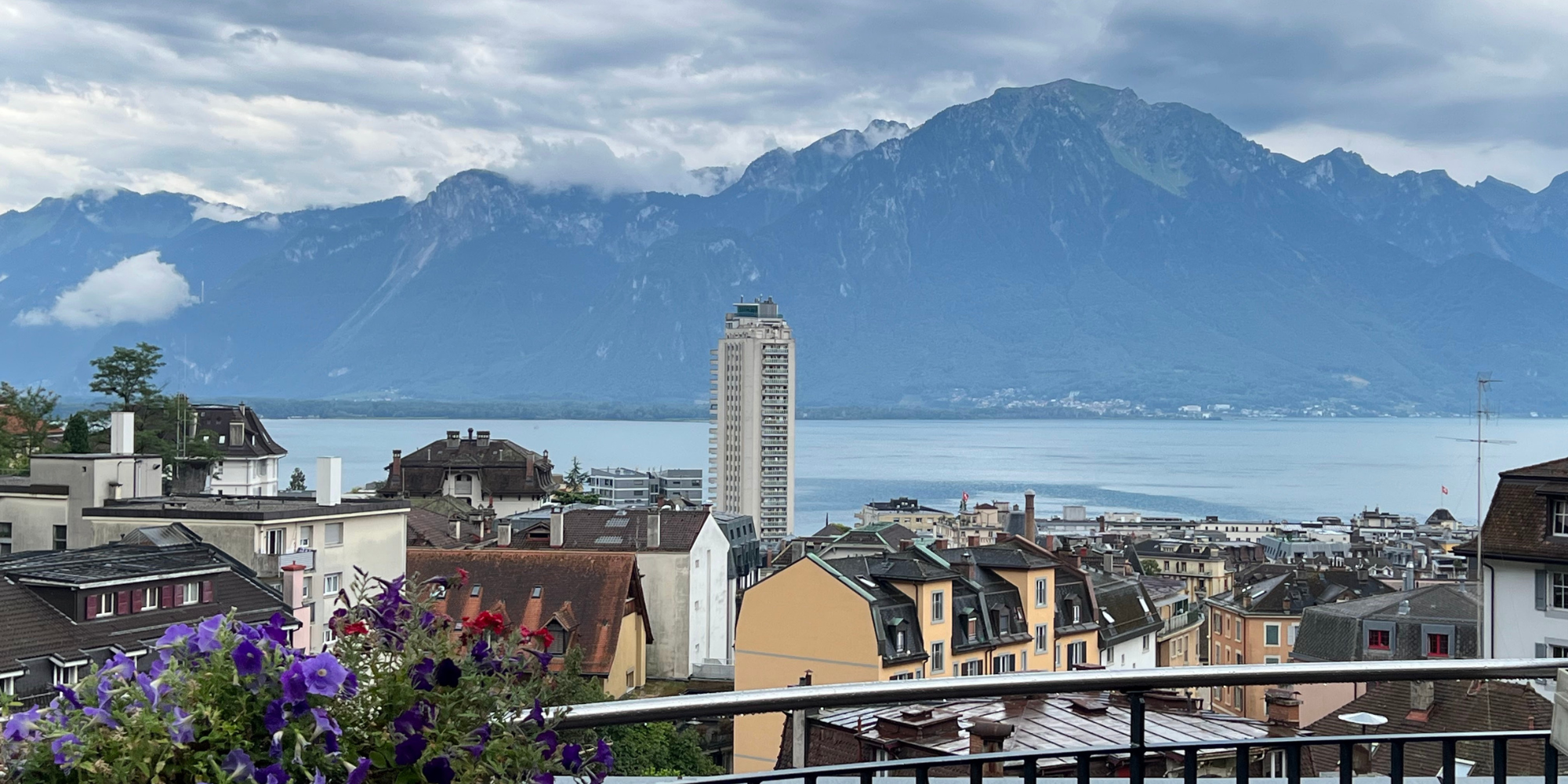
A Final Dinner in Montreux, on the Shore of Lake Geneva
Where the Via Alpina ends, and the memory begins
On Day 8 of this adventure, you’ll descend from Rochers de Naye, passing through La Rambertia, a high-altitude botanical garden where you may spot edelweiss, Switzerland’s national flower. From there, the trail leads down toward the shore of Lake Geneva, marking the final stretch of your journey on the Via Alpina.
Reaching the end feels very satisfying. It’s a quiet moment to take in what you’ve just completed.
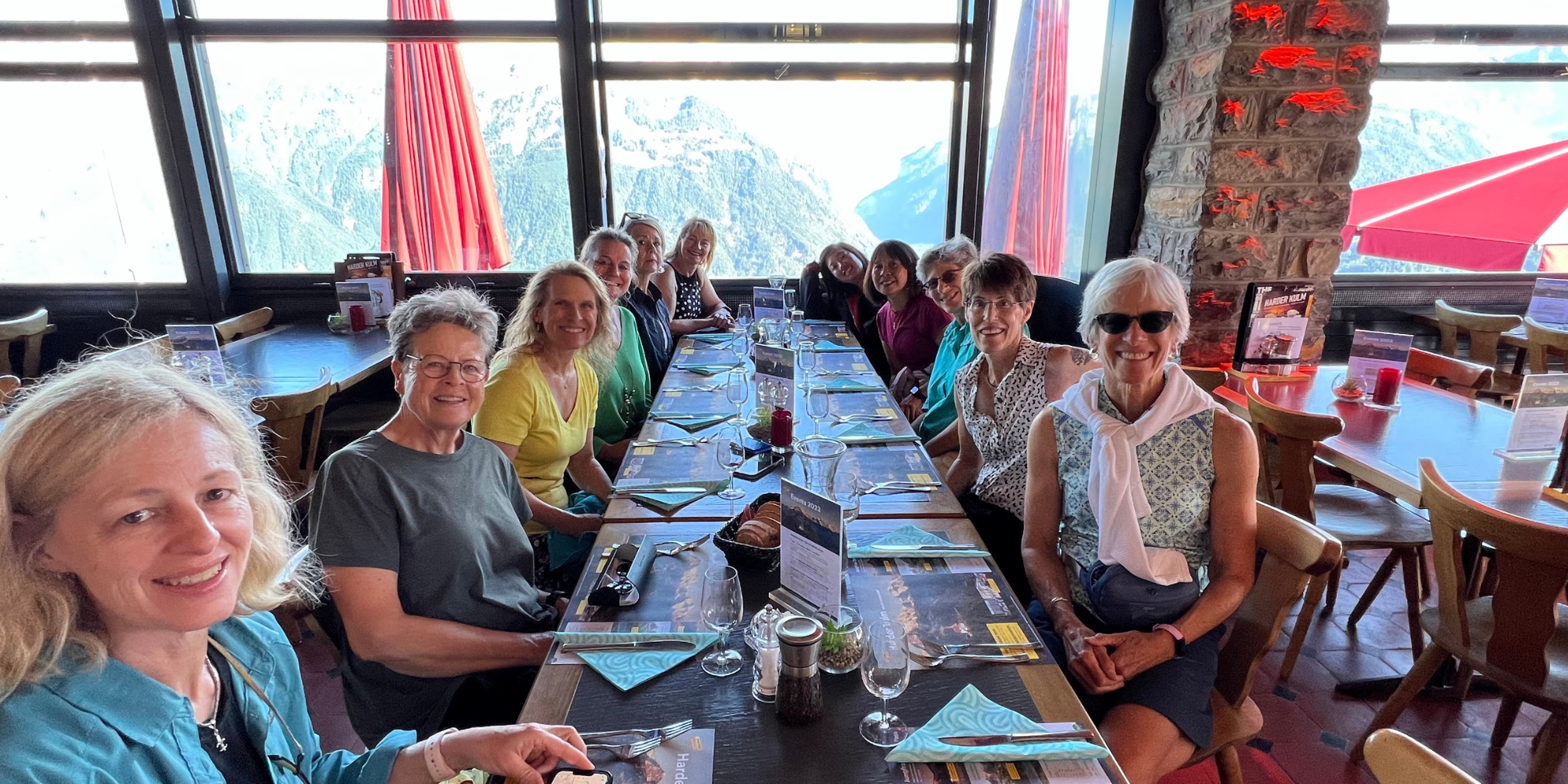
That evening, you’ll gather for a farewell dinner in Montreux. Set along the lake, it’s an easy place to settle in and reflect on the week—sharing a meal, a glass of wine, and the moments that stand out most.
The conversation often returns to the same highlights: meeting the cheese maker, sitting down to fondue after a day on the trail, picking up chocolate along the way, and enjoying lunch in the mountains.
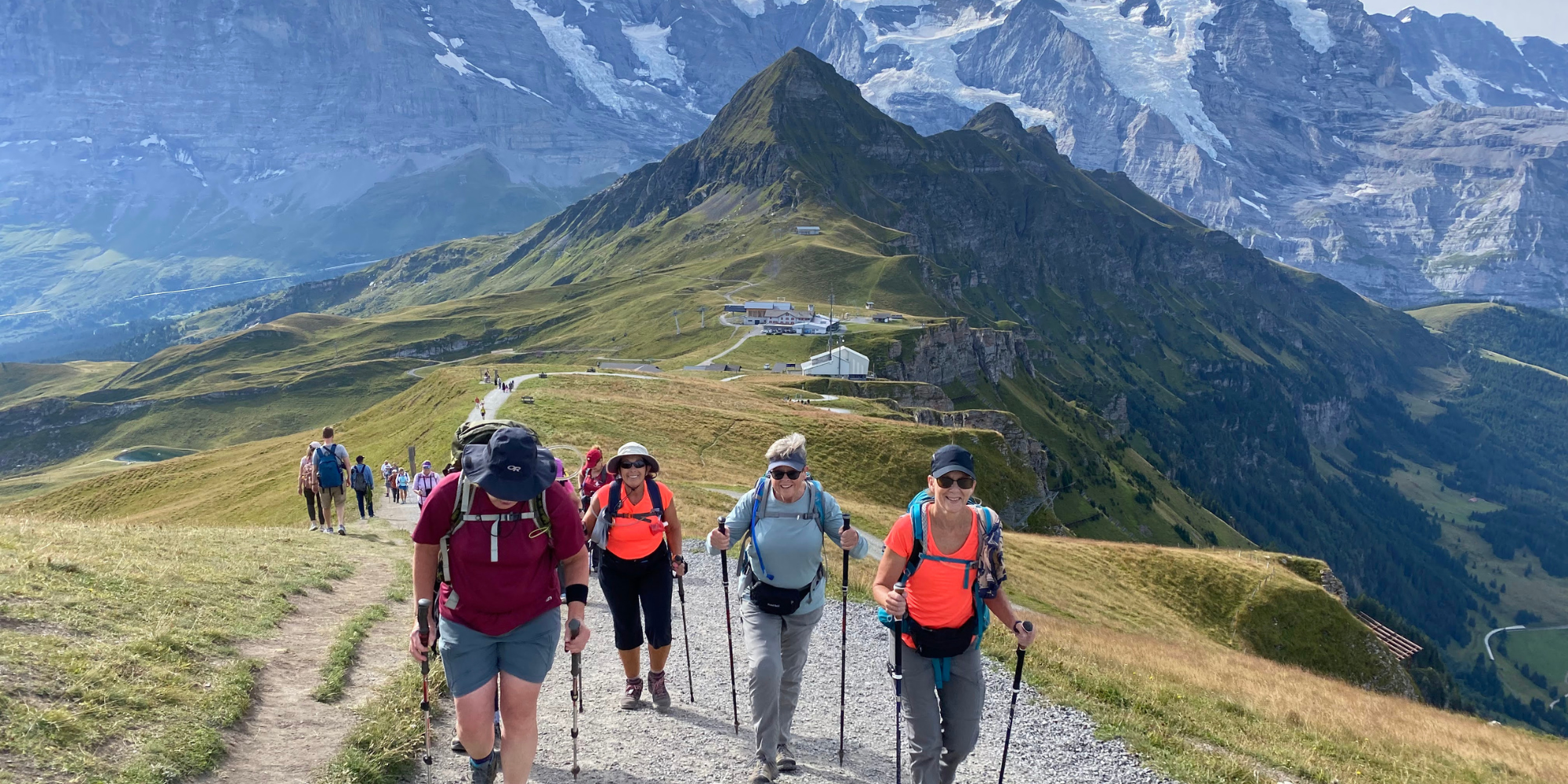
Ready to Taste the Alps for Yourself?
Switzerland has a way of making everything taste better: the air, the effort, the landscape, the company. But it helps that the food is also genuinely delicious, rooted in centuries of Alpine tradition and made from ingredients whose quality you can trace directly back to the meadows and the mountains and the animals you walk among.
Our Switzerland: Hiking on the Via Alpina trip runs in summer with a maximum group size of 12. All meals, guides, and that cheese farmer introduction are included. It is, without question, the tastiest way to hike in Switzerland. And quite possibly the tastiest way to hike anywhere.