
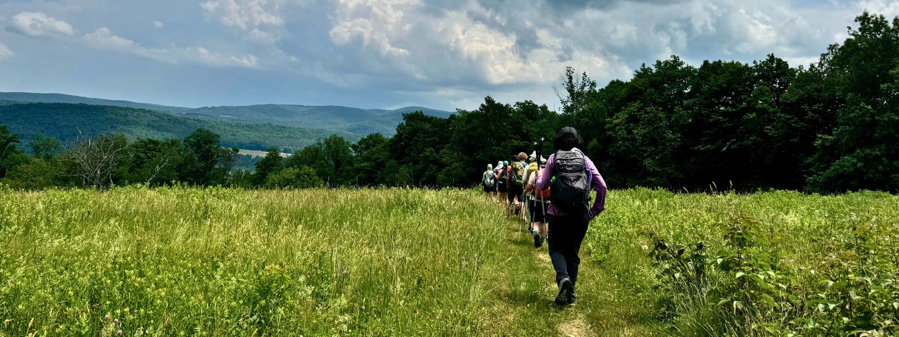
"Whew! It seems too hot to hike! And I have a trip coming up!" Have you found yourself saying this? If you're like me, hiking or doing any outdoor sport in the heat calls for preparation. Hiking is one of those activities where planning plays a really big role. It helps you stay safe, hydrated, and energized on the trail.
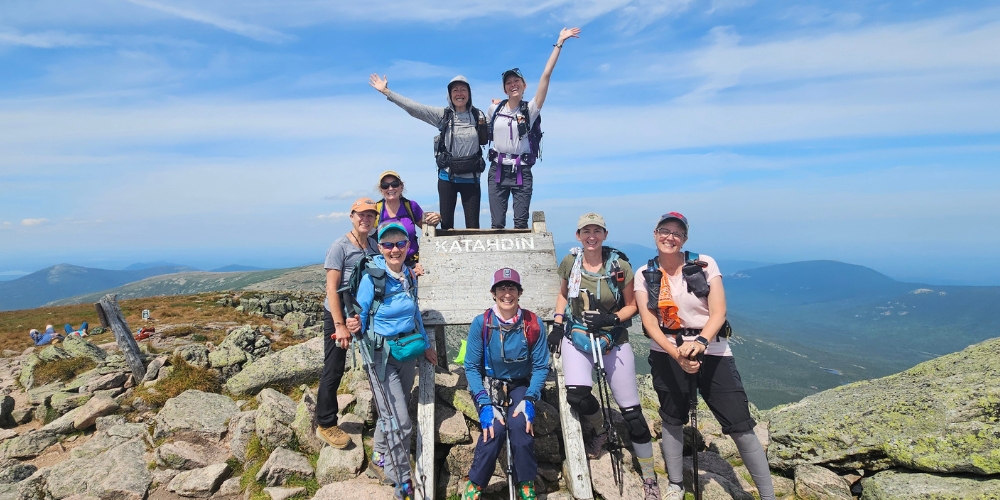
Why Heat Prep Matters
When temperatures rise, your body works harder to regulate heat. This increases your heart rate, makes you lose fluid faster, and makes you get tired quicker; we call this "the mumbles." Focus, clear thinking, and decision-making become more difficult. When you notice any of these symptoms, it's time to stop, take a break, drink some water, and find shade.
Also, check with your doctor about medications that can increase your risk from the heat. Some medications interfere with your body's ability to cool itself, regulate fluids, or sense thirst.
As the saying goes: "Fail to prepare, prepare to fail." -Benjamin Franklin.
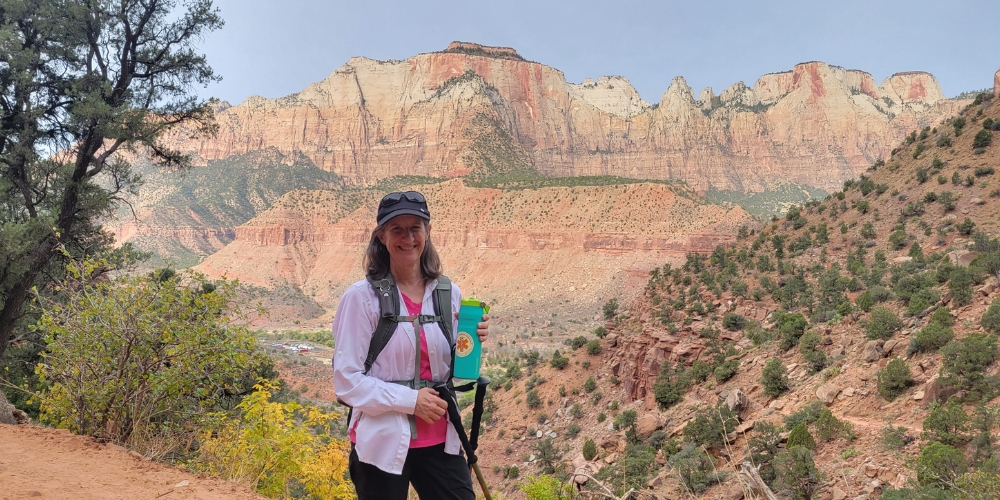
Here's How to Prepare for Hiking in Heat:
Plan Your Timing
The best time to hike in the heat is early morning, this typically avoids the hottest part of the day, between 11 a.m. and 4 p.m. If you can't avoid hiking during the warmest hours, maintain hydration and nutrition, wear sunscreen and sun-protective clothing, and take frequent breaks.
Acclimate ahead of time. As soon as spring hits, it gets hot fast, and acclimation is difficult. Slowly build up your time in the heat rather than retreating straight to the air conditioning. Add more time in the sun gradually—with sunscreen and sun-protective clothes, of course.
Know before you go. Check the miles, elevation, and difficulty of the day's hike. Is there shade along the route, or is it open air with no sun protection? Slow your pace, take breaks, and listen to your body. Be mindful of how you're feeling that day.
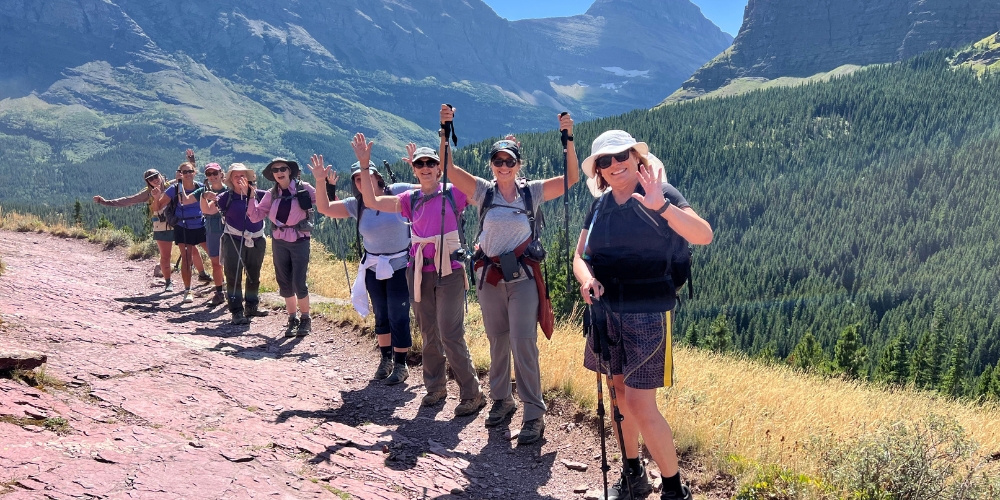
Hydration: Before, During, and After
Pre-hydrate. Get your water intake going before you even set foot on the trail, especially if you're anticipating hot and humid weather. A day or two before your hike, stay on a hydration routine to make sure you're drinking enough. Some studies recommend 1 ounce of water for every pound of body weight. For example, a 160-pound person should aim for 80 ounces or more. Others recommend 8 to 10 cups a day.
Hydrate on the trail. Here at AGC, we recommend at least 2 liters of water for a hike; some people pack more, but that's the minimum. Plan to bring more than you think you'll need, in case you need to share. Consider a bladder or hydration reservoir with a sip tube; not everyone's a fan, but in hot weather they make it easy to keep sipping. Aim for a few sips every 15–20 minutes, and whenever you're thirsty.
Know your output. Keep an eye on your urine color as a hydration check:
-
Clear as a stream? You're living the dream.
-
Yellow and bright? Your water bottle's too light.
-
Dark like honey? That ain't funny.
Watch for overhydration, too. Hyponatremia (overhydration) is real and can be dangerous. The symptoms look a lot like dehydration, fatigue, headache, nausea, which can tempt you to drink even more water. In reality, sodium levels in the blood become diluted and cell function is impaired. Let thirst guide you, and keep monitoring your urine output.
Bring a filter. A small water filter can be a lifesaver. The Katadyn BeFree is light, easy to use, and worth carrying. It’s my favorite to bring on the trail. Before you go, check a trail app like AllTrails for up-to-date water source availability along your route.
Electrolytes and snacks. Sodium and minerals are lost in sweat, so electrolyte drinks or gels can help replenish what's lost. Aim for no more than 1–2 servings per day. Avoid coffee, tea, and alcohol while rehydrating, and keep eating even if you don't feel hungry. A small snack about every hour keeps your energy up.
Dress for Heat Success
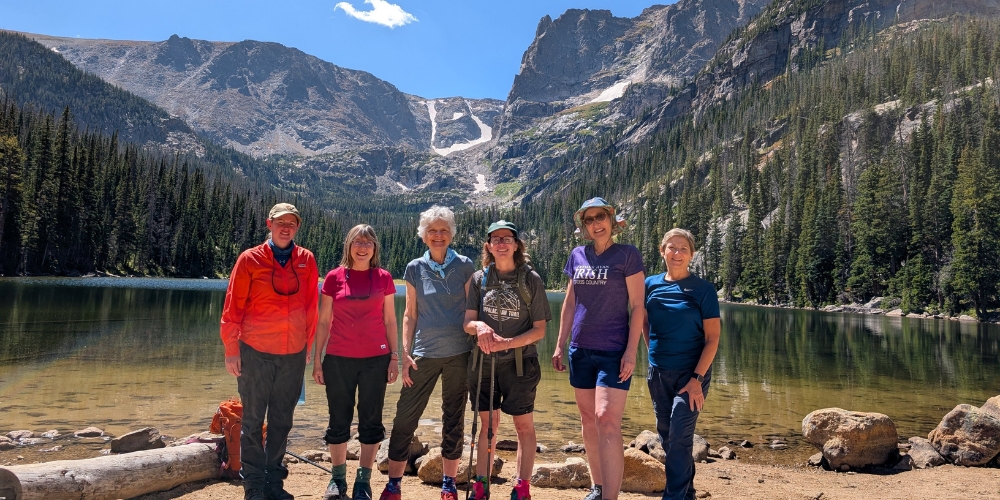
It sounds counterintuitive to cover up when you're hot, but the right clothing protects your skin and helps your body stay cool. You can view a full list of clothing recommendations in our gear guide here.
-
Sun protection: Sunscreen everywhere, don't forget the tops of your hands, with extra for reapplication later in the day.
-
Clothing: Loose-fitting, UV-protective layers: a long-sleeve sun shirt or sun sleeves, lightweight long pants or zip-offs, a neck gaiter, and a brimmed sun hat.
Moisture-wicking, light-colored, breathable fabric works best year-round; some shirts even have vents for airflow. Hiking skirts are a fun, airy option. Avoid cotton, which absorbs moisture and takes forever to dry.
-
Feet: Wool or synthetic socks let your feet breathe. Pack an extra pair for a midday swap, your feet will thank you. (Gold Bond powder is a personal go-to for keeping hot feet dry.)
-
Finishing touch: Lightweight sunglasses to complete the look.
Recognizing Heat Illness
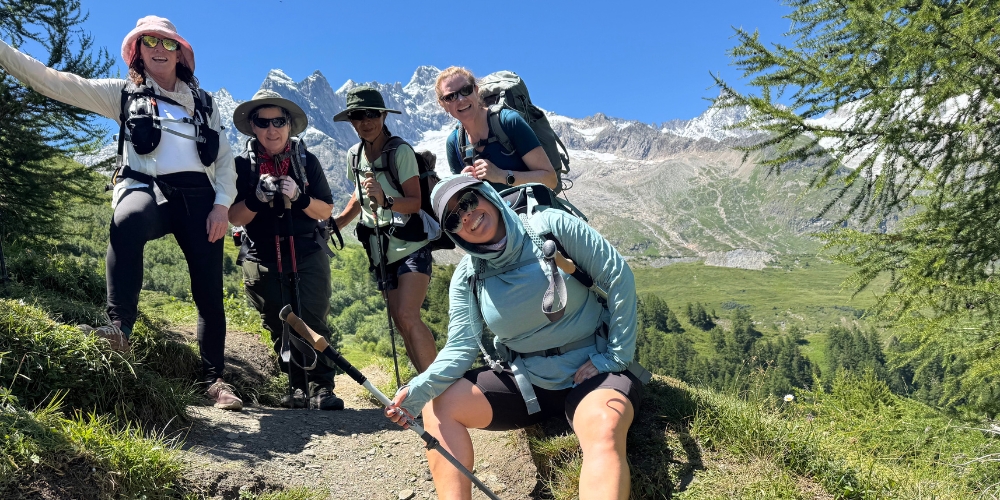
Keep an eye and ear out for your hiking buddies as well as yourself.
Heat exhaustion looks like: pale, cool, clammy skin, heavy sweating, and being alert but dizzy, headachy, nauseous, or crampy. Rest, cool down (shade and water), and hydrate.
Heat stroke looks like: hot, red, dry skin, possibly no sweating, confusion or disorientation, and a high temperature—possibly even unconsciousness. Call 911 immediately.
Cooling Tricks Worth Packing
The goal of adventuring in the heat is to have fun, not tough it out. A little planning makes all the difference in staying safe and being able to get back out there again. Keep a checklist in your pack so you never forget the essentials, and try a few of these tricks:
-
Throw ice in your bladder or water bottle for a cold sip on the trail.
-
Pack a bathing suit in case there's a swimming hole along the way.
-
Dip your clothes in a stream and hike in them wet.
-
Splash cold water on your wrists, temples, and the back of your neck — these pulse points carry chilled blood to your core fast.
-
Freeze your cooling cloth or buff overnight before you go.
-
Take a 20–30 minute break in the shade when you need it.
-
Snack every hour to keep your energy up — a juicy orange or frozen grapes are trail favorites. (Just watch out for melting chocolate — eat that one first!)
-
Splurge on a hiking umbrella if you really want to level up your heat game.
The heat doesn't have to keep you off the trail, it just asks you to be a little smarter about how you get out there. So pack your water, bring the electrolytes, grab your sunhat, and go enjoy it. Stay cool out there, and have fun!