
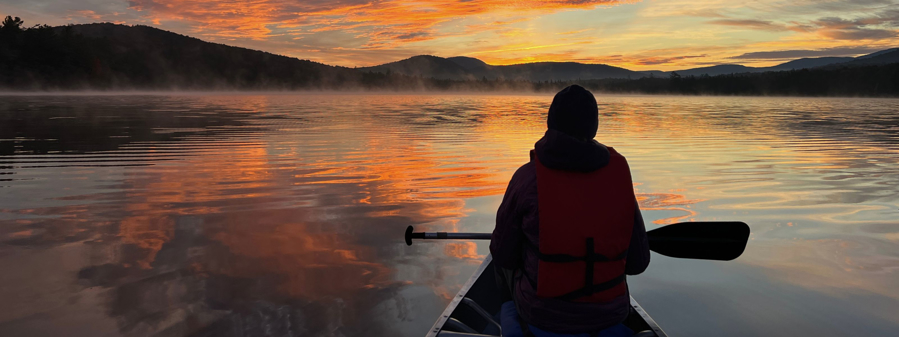
Whether it’s a cool running mountain stream, a placid lake, a dark sky filled with stars, a summit view, or a favorite cafe with music and dancing, we all have places in our lives that make us feel connected and safe. These are the places we return to, so we can re-energize our spirit, find solace, and maintain balance. For me: This is the North Country; the Adirondack Mountains. On a map, this is the area north of Albany, south of the Canadian Border, east of the Great Lakes and the St. Lawrence River, and west of Lake Champlain and Lake George. When you visit this area, you will discover a very special place.
My personal connection to the Adirondacksdates back to my early childhood. As a young girl, my family had a cabin on the Vermont side of Lake Champlain overlooking the Adirondack Mountains. We’d watch the sun go down over this beautiful mountain range and I would dream about animals, trails and trees that inhabited the land. Occasionally, my family would cross Lake Champlain and visit the place of my dreams: the Adirondacks. I was a lucky kid for sure.
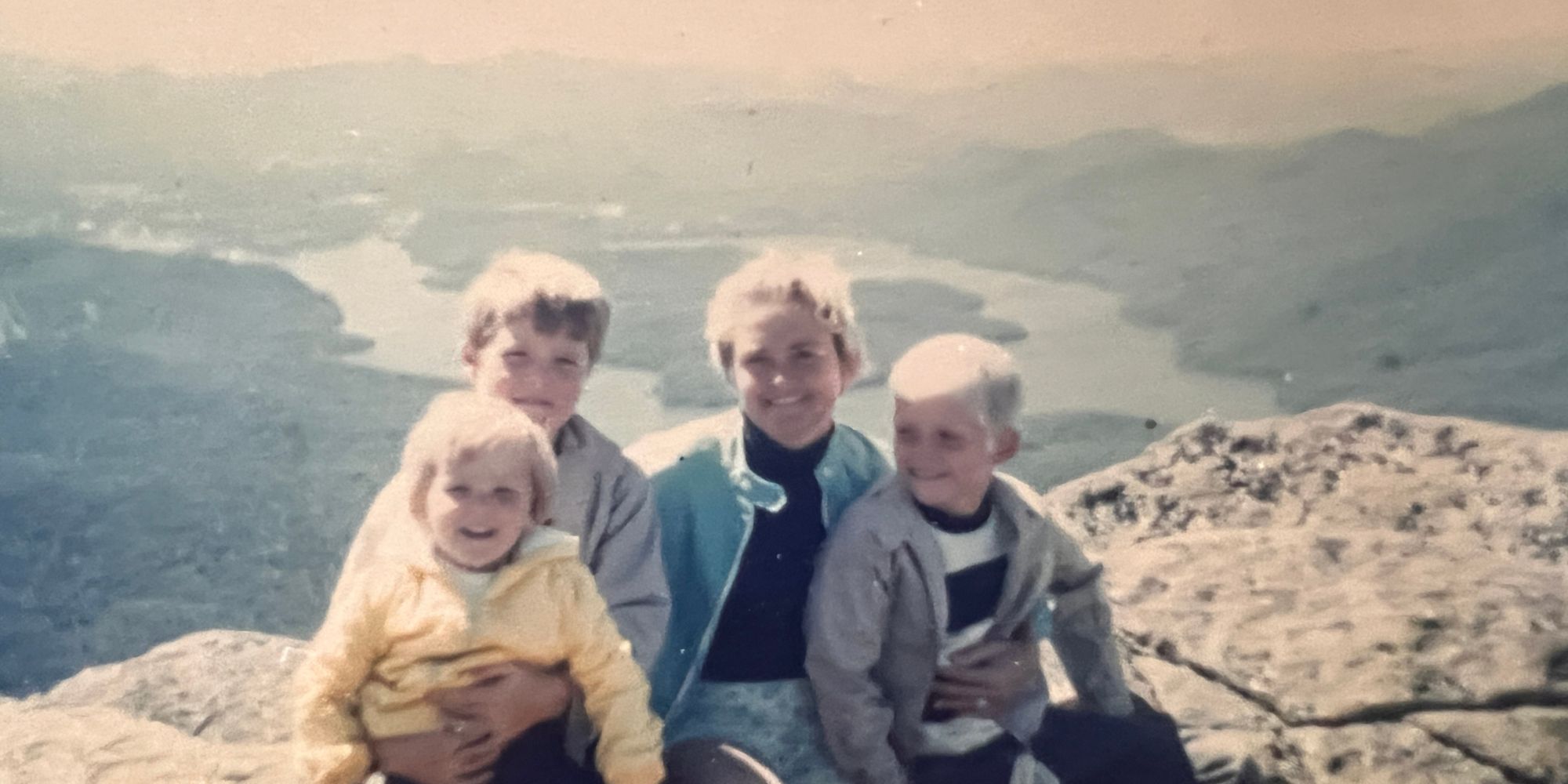
During the 1960’s, my family loved to drive to the summit of Whiteface Mountain via the Veterans Memorial Highway. This was built by the Civilian Conservation Corps under Franklin D. Roosevelt’s work project. Construction began in 1929 and opened in 1934 as a tribute to World War I veterans. From the summit, you can see the highest peaks in the Adirondacks as well as Vermont's Green Mountains, Lake Champlain, the St. Lawrence Valley, plus the Montreal skyline on a clear day. To this day, this is one of my favorite views. I highly recommend it!
Once I graduated from high school, it was time for me to pick a college. I knew I wanted to stay in the northeast, but I wasn’t sure where. A family friend suggested I check out Paul Smith’s College in Paul Smiths, New York (a rural town). I can remember driving north from Albany; entering the great North Woods, and feeling right at home. The smells, sights, and sounds of the forest were familiar and comforting to me. I had already been here and began to believe this might work for me. Ultimately, it’s where I chose to go to school and obtain an A.A.S. in Water Ecology, a B.S in Biology/ Biochemistry and my M.S. in Teaching.
I have lived and worked here since. To say I made a good choice is an understatement, but it’s curious what keeps a person in one place for so long? I hope to let you in on that...
Remarkably for me, many of the people I met in my first years of living in the Adirondacks are still the people who are my friends today. This speaks volumes regarding the strength of our community. The people who stay here love the forest and lakes and embrace the changing seasons. They are hard-working, resilient, stubborn, yet kind. Once the area gets in your soul, it’s a place you always want to come home to. (It’s also great to leave so that you have perspective on just how beautiful it is in these mountains.)
What Makes the Adirondack Park So Unique
Size, scale, and protected land: the Adirondacks by the numbers
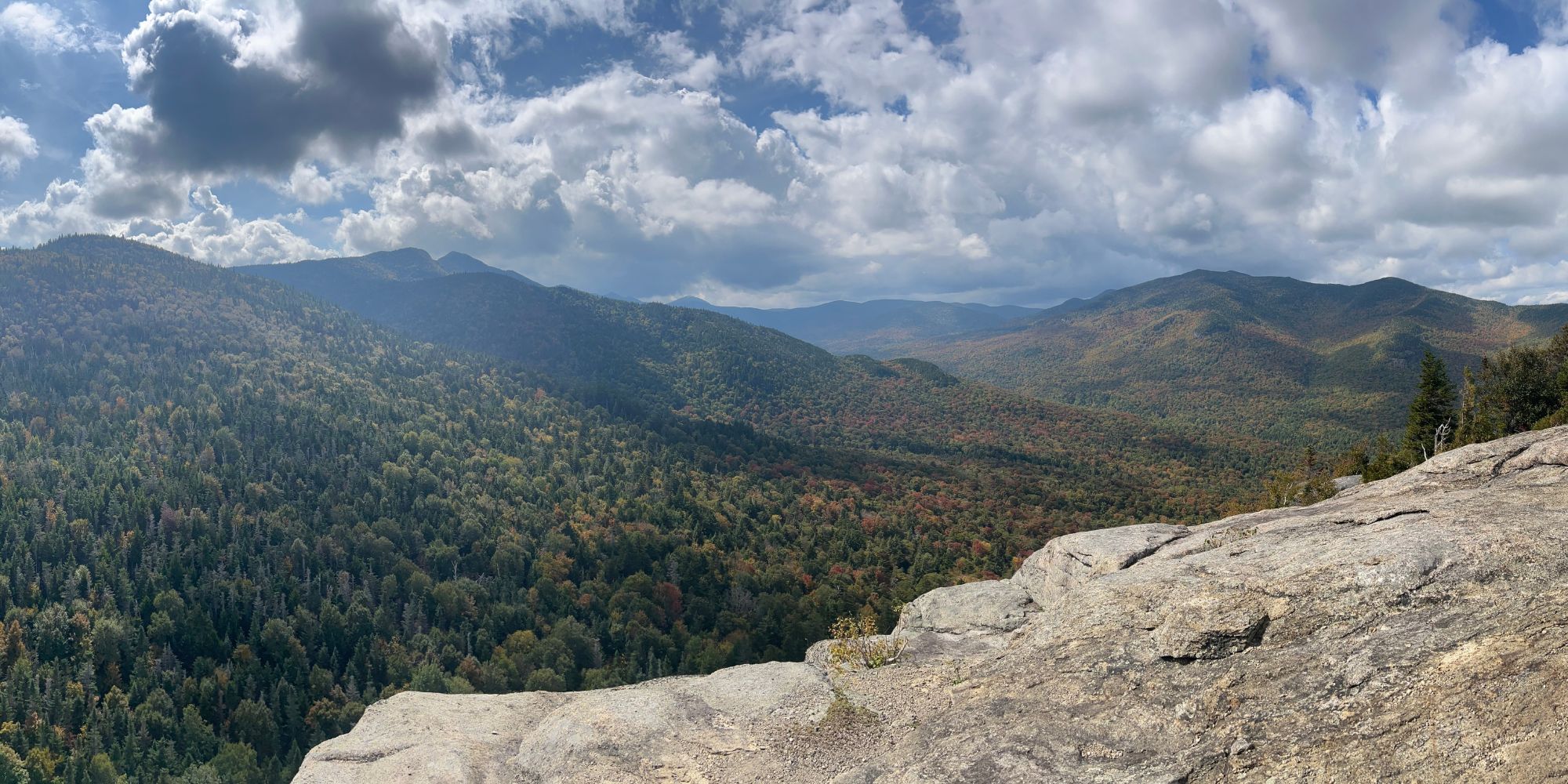
Today, the Adirondacks consist of 6,000,000 acres of private and public land. This land is considered to be the biggest protected landholding east of the Mississippi River. There are statistics that say five of our national parks could fit in the same landmass: They are Yellowstone, Yosemite, Great Smoky Mountains, Grand Canyon and Glacier. Wow, that’s Big!
Traditionally, these lands were the Indigenous homeland of the Iroquois nation, specifically the Mohawk. The land was used for thousands of years for hunting, fishing, and gathering. Over time, the lands changed hands and became privately and publicly owned.
Fast forward to the 1800s: the land had been logged extensively, and people had become concerned about water quality, lack of scenic beauty, and loss of animal habitat. People with great foresight decided to petition New York State, asking them to protect the decimated forest.
New York State agreed and added an Article to our state constitution, it protects the Adirondacks as well as the Catskill Mountains. What you see today is a mosaic of public and private land protected under the New York State constitution. It’s free and open to the public through taxpayer dollars - NO gates or Entry fees. As New Yorkers, we are especially proud of this!
This style of conservation is not unique in the world, but it’s very unusual and is unique in our country. Two-thirds is public land, and one-third is private land. The public land and private land have tens of thousands of lakes, 46 mountain peaks over 4000 feet, and giant parcels of protected forests. When locals say “we live in the forest,” we mean it. Many of our homes are surrounded by protected parcels of state and private forest. Ecologically, we are one of the largest Carbon sinks on the planet. Often, I meet people who say, “we had no idea this was here.” But, it’s no secret…
Tourism drives our major economy, as logging is only allowed on private parcels, and mining is very rare. We have small towns and villages throughout the Adirondack Park, which welcome tourism, sustain our local economies, and bring culture to the area. Visitors and 160,000 year round residents have access to the mountains, forested trails, and lakes through state access points or from their private land. Throughout the year, millions of people tour the region. Towns with names like Old Forge, Lake George, Saranac Lake, Lake Placid, Tupper Lake, Raquette Lake, Indian Lake, and Blue Mountain Lake are some of the most visited areas. Each of these communities has a local economy with year-round and seasonal residents. There are restaurants, grocery stores, museums, and other amenities, but the real attraction is the forest.
Things to do in the Adirondacks: hiking, paddling, and more
If you visit the Northern Adirondacks for hiking in the High Peaks (our tallest mountains), you will be treated to over 250 miles of foot trails and 55 miles of horse trails. Our tallest mountain, named Mt. Marcy, has an elevation of 5,344 ft. If you can withstand a 14-mile round-trip hike (+3,330 elevation gain), you’ll be rewarded with 360-degree views from her granite summit.
Lake Placid: Olympic legacy and year-round adventure
Once you finish hiking, you can retire to the village of Lake Placid and find a community famous for holding the 1932 and 1980 Winter Olympics. We have one of two Olympic training Centers in the U.S. (the other in Colorado Springs). This area is still famous today for holding world-class events. This is due, in part, to New York State supporting and continually refurbishing the Olympic venues.
Additionally, there are thousands of less-visited areas for hiking. People flock to areas like Lake George, and although the village is extremely touristy, the Lake is one of the finest in the Adirondack. Many call it the Crown Jewel. It is beautiful. Blue Mountain Lake and Tupper Lake each have exceptional museums. One focuses on Adirondack History and one on Natural History. Saranac Lake was famously developed as a tuberculosis-curing community in the 1900’s and had 1000’s of famous people curing in the village.
Four seasons of adventure: what to expect year-round
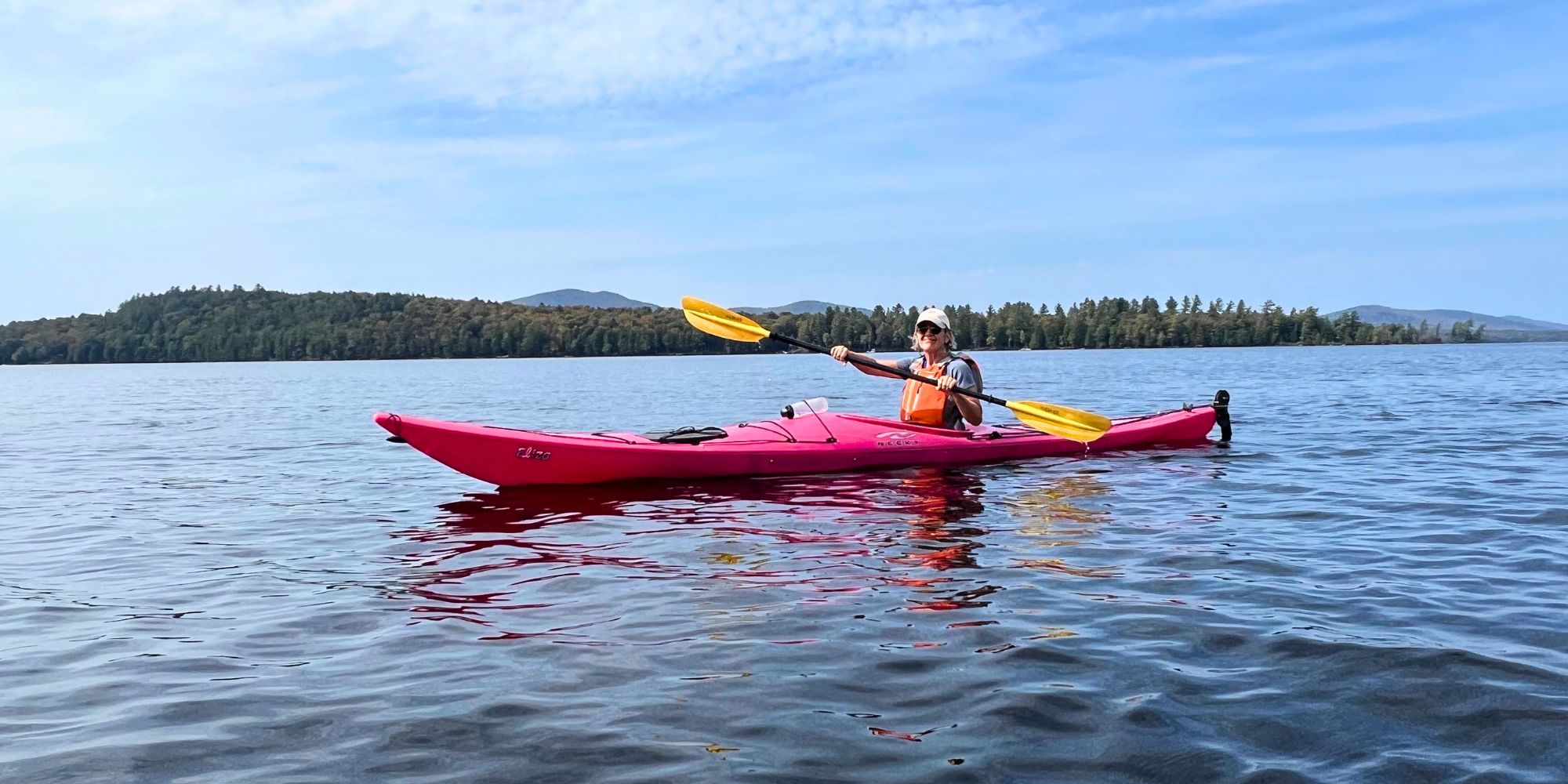
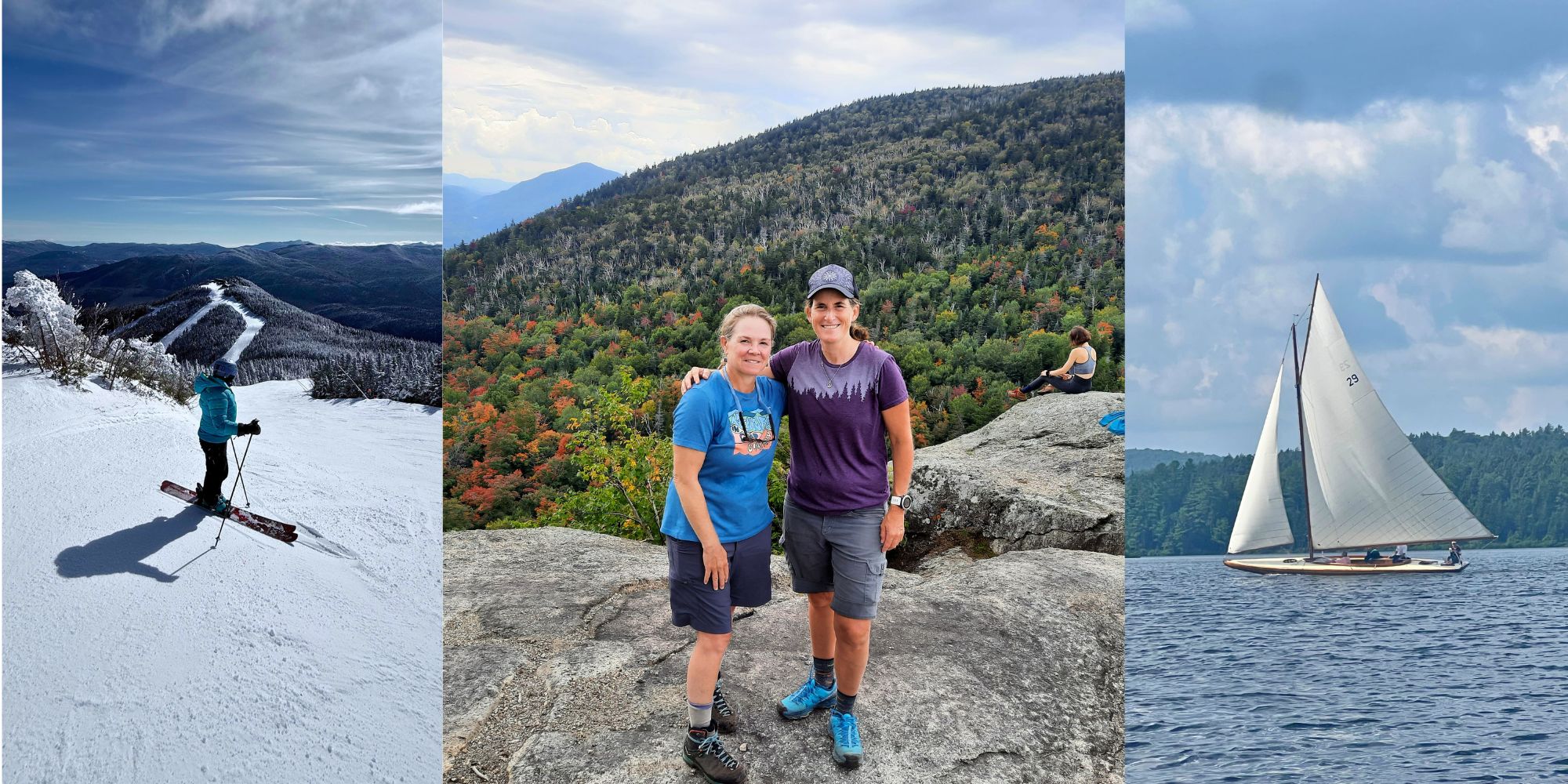
People travel to enjoy canoeing, camping, fishing, sailing, motor boating, bicycling and horseback riding. In winter, people cross-country and downhill ski, snowshoe and snowmobile, iceboat, and ice fish. Let me warn you, the winters are long, gray, and cold. Saranac Lake, NY (my home area), is often noted as the coldest spot in the nation.
Adirondack canoe camping and the Northern Forest Canoe Trail
Today, the Northern Forest Canoe Trail(NFCT) is a 740-mile traditional water corridor extending from Old Forge, New York, to Fort Kent, Maine. Each year, people undertake a paddling journey that follows the Indigenous travel routes through the Northern Forest. The route represents a time when waterways were used as trade corridors.
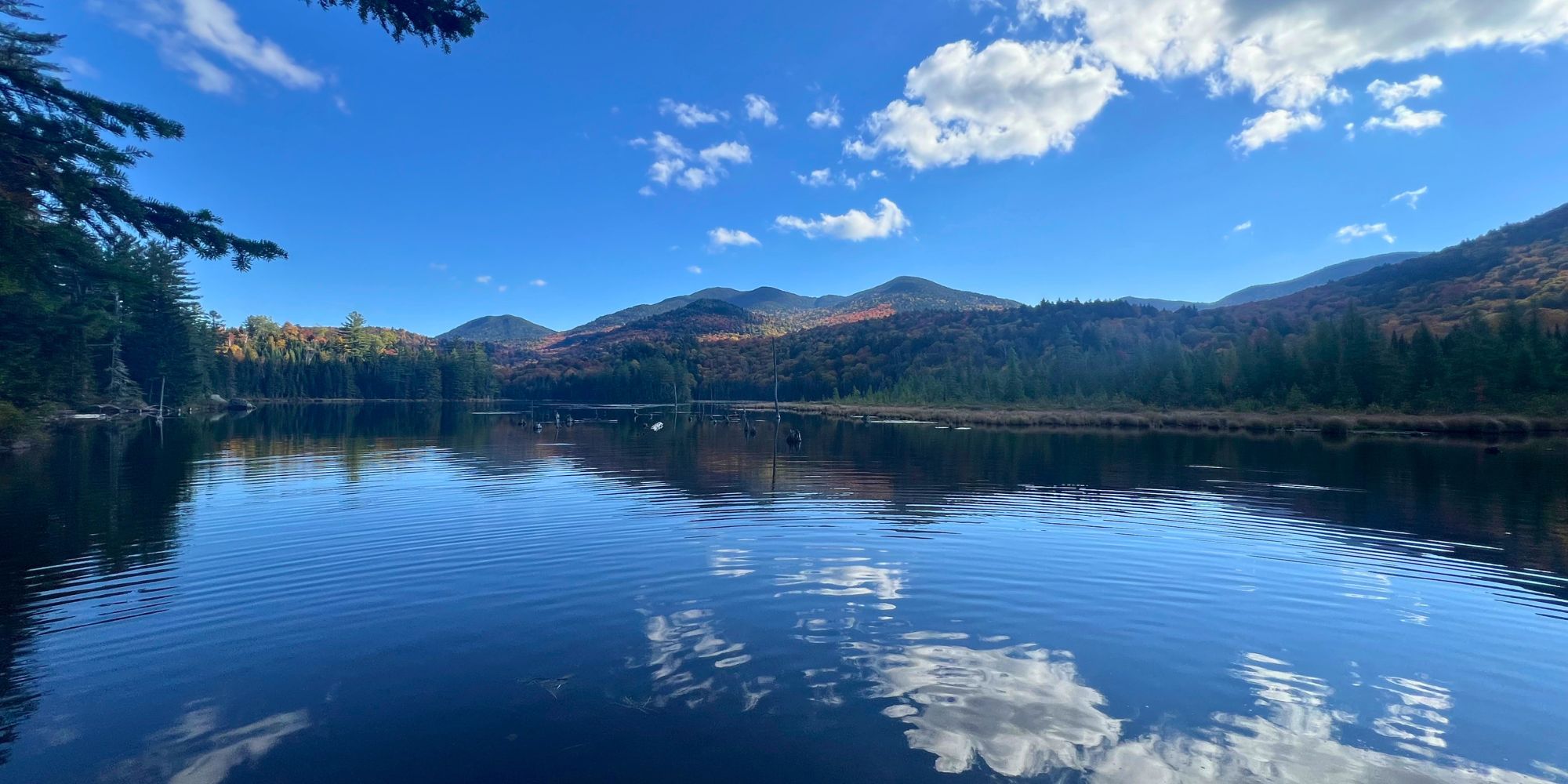
Some of my favorite memories in the Adirondacks are from canoe camping trips. I love being in the forest at night and seeing the stars through the trees, listening to loons or owls calling and having a campfire. In the morning, there is potential for the added bonus of a swim. One of the most beautiful places I’ve ever been is the Boreas Ponds Tract. Although it is not on the NFCT (nor is it easily accessed), it is well worth the effort.
If camping is not your style, you may appreciate the scenery of the High Peaks from a distance.
Some of the lower peaks offer great viewing areas for seeing the higher mountains and many have fire towers on the summits. I will say there’s nothing like being on one of our High Peaks: Algonquin is magnificent, as are so many others, there’s a total of 46.
Adirondack hiking tips: how to prepare for the backcountry
A local tip, I would remind people to be extremely prepared in these mountains. They are more difficult than people expect. Weekly, we see our search and rescue teams addressing lost hikers, injuries, and people who are severely unprepared for the backcountry. So, make sure you prepare yourself; especially during shoulder seasons, the weather changes quickly.
Why people fall in love with the Adirondacks (and never leave)
Now that you have a little background about what’s here, let’s revisit why I stay here? We have cold, snow, and darkness for 6 months, and when all that goes away, we have bugs: of every kind. Some might think this does not sounds good at all, and mainly you’d be right. But, small towns breed community and friendship, and the locals are the backbone of this area. They’re like-minded people who share a love of the great Northern forest. They’re hard-working, gracious, educated, and strong, they’re friendly and will warm up quickly (even if they stare when you come into their bar, which they will.) The community here anchors me.
Additionally, my love for the northern Boreal forest has become a keystone in my life. It grounds me when I need nurturing and allows me freedom to explore. My work as an outdoor guide has been a blessing for me. Being able to share this scenic beauty and help people enjoy the outdoors has been a gift. I have been lucky to be a raft guide on the Upper Hudson River, and also a hiking guide and canoeing guide throughout the park. That has been an opportunity I have never taken for granted.
When you come to visit the area, I hope you fall in love with the scenic beauty and enjoy the endless recreational possibilities. We are within a day's drive of major metropolitan cities, such as New York City, Philadelphia, Boston, Montreal, and Ottawa. You can visit quiant towns and villages which have places to stay, restaurants, historical and cultural events, as well as tourist information. And if you love to camp, that’s available too. I hope to see you in the Great Northern Forest!